 EN
EN

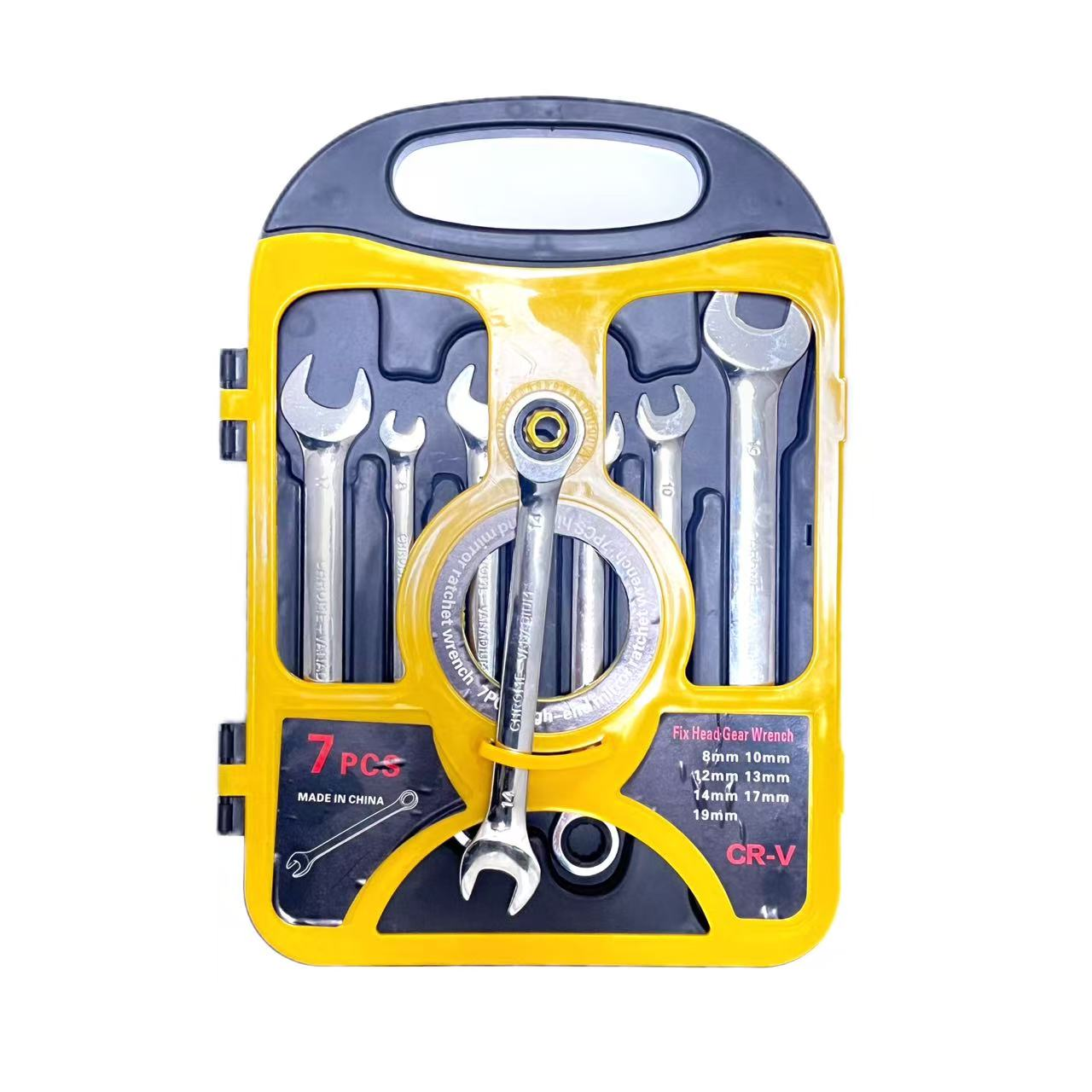
Understanding the Ratchet Mechanism: Performance, Precision, and Innovation
How Ratcheting Mechanisms Improve Efficiency for Professionals
A professional-grade ratchet wrench set eliminates tool repositioning through its bidirectional pawl system, maintaining constant fastener contact in confined spaces. This continuous engagement reduces downtime by 60% compared to traditional wrenches, particularly when servicing engines or machinery with obstructed access points.
Evaluating Tooth Count and Swing Arc for Smooth Operation
Modern 90-tooth ratchets operate with a 5° swing arc—75% tighter than standard 45-tooth models—enabling torque application in areas with limited clearance. Higher tooth counts distribute stress across 30% more contact points, reducing gear wear while maintaining torque capacity above 150 ft-lbs for heavy-duty applications.
Latest Innovations in Ratchet Design: Smaller Arcs, Higher Durability
Leading manufacturers now combine vacuum-forged chrome vanadium cores (58–60 HRC hardness) with precision-machined 90-tooth gears. Advanced surface treatments like nitriding, validated in 2023 mechanical engineering studies, demonstrate 40% greater wear resistance than chrome plating in accelerated corrosion testing.
Key Factors: Engagement Precision and Long-Term Reliability
Tolerance control (±0.0002") in pawl mechanisms ensures consistent engagement through 100,000+ directional changes. Independent testing shows premium ratchet wrenches maintain less than 3% torque variance after 18 months of daily use and outperform entry-level tools by 35% in vibration fatigue resistance.
Matching Ratchet Wrench Drive Sizes to Application and Torque Requirements
Understanding 1/4”, 3/8”, and 1/2” Drive Sizes and Their Uses
Professionals select ratchet wrench drive sizes based on fastener dimensions and torque demands. The 1/4” drive excels in precision tasks like small engine repairs or electronics, where tight clearances demand compact tools. For automotive repairs and general maintenance, the 3/8” drive balances maneuverability and power, handling fasteners up to 14mm with ease. The 1/2” drive dominates heavy-duty applications, providing the leverage needed for suspension components and industrial equipment requiring over 200 Nm of torque. According to the 2023 Professional Mechanics Survey, 76% of technicians use all three drive sizes weekly to accommodate varied tasks.
Why 3/8” Is the Standard for General Professional Use
The 3/8” drive remains the cornerstone of professional ratchet wrench sets due to its versatility. It supports torque ranges of 30–108 Nm, ideal for most lug nuts, engine components, and machinery fasteners. Its mid-size profile allows access to confined spaces while still accommodating sockets up to 19mm. For instance, transmission repairs typically require 10–15mm fasteners, where the 3/8” drive reduces hand strain compared to bulkier 1/2” tools. Data from the 2024 Industrial Tool Report shows 63% of automotive jobs are completed faster with 3/8” drives due to reduced tool swapping.
When to Use Compact 1/4” or Heavy-Duty 1/2” Drives
Opt for 1/4” drives when working in HVAC systems or tight electrical panels, where their 6.35mm drive head prevents interference with adjacent components. Conversely, 1/2” drives become critical for high-torque demands—such as tractor axle nuts (300+ Nm) or industrial machinery—where their 12.7mm square drive withstands forces that smaller drives cannot. A 2023 study found 1/4” tools reduce repair times by 22% in confined spaces, while 1/2” drives minimize fastener rounding on bolts exceeding 18mm diameter.
Building a Complete Ratchet Wrench Set Across Drive Sizes
A comprehensive ratchet wrench set integrates all three drive sizes to address 95% of professional scenarios. For example:
- 1/4” set: 6–14mm sockets for precision work
- 3/8” set: 8–19mm sockets for general repairs
- 1/2” set: 14–32mm sockets for heavy machinery
The 2024 Industrial Tool Report notes that 84% of mechanics carrying multi-drive sets complete complex jobs 30% faster than those with single-drive kits. This flexibility ensures readiness for everything from motorcycle engines to hydraulic systems without compromising efficiency or tool integrity.
Material Quality and Build Durability in Professional-Grade Ratchet Wrench Sets
Chrome Vanadium Steel vs. Carbon Steel: Real-World Performance
The quality of professional ratchet wrench sets really depends on what they're made from. According to a recent study published in the Tool Metallurgy Journal last year, chrome vanadium steel stands out because it can handle about 22 percent more stress before failing compared to regular carbon steel during those back-and-forth torque tests. That's why most serious mechanics and factory workers stick with this alloy for day-to-day heavy-duty work. The steel contains around 0.8 to 1.1% chromium which helps prevent rusting over time, and the added vanadium makes these tools tougher against sudden impacts something anyone who deals with stuck bolts knows is super important. Sure, carbon steel options cost roughly 30% less upfront, but lab testing shows they start showing signs of wear after just over five thousand torque cycles. Most technicians won't risk buying them for anything beyond light home projects.
The Role of Heat Treatment and Forging in Tool Longevity
When properly heat-treated, chrome vanadium steel can reach Rockwell hardness levels around 54 to 56 HRC, which sits right in that sweet spot where the metal isn't too brittle but still holds up against wear. Cold forging makes a big difference too. These forged ratchets keep their grain structure intact about 40 percent longer compared to regular cast tools, meaning they just last longer before needing replacement. Many top tool makers have started applying induction hardening selectively to the drive teeth area only. This approach keeps the handle part flexible enough for comfortable grip while still giving those drive teeth enough strength to handle up to 120 Newton meters of torque without cracking under pressure.
Coatings and Corrosion Resistance: What Works in Harsh Environments
Salt spray testing (ASTM B117) reveals:
| Coating Type | Hours to First Rust | Cost Premium |
|---|---|---|
| Phosphate + Oil | 96 | 12% |
| Electroless Nickel | 300+ | 35% |
| Bare Steel | 24 | - |
Automotive technicians report phosphate coatings last 18–24 months in daily shop use, while electroless nickel survives five or more years in marine environments.
How to Identify Genuine Build Quality Beyond Brand Hype
Three non-brand indicators separate professional-grade tools:
- Seamless transitions between handle and drive head (indicates single-piece forging)
- Mirror-finish socket walls with less than 0.1mm tolerance
- Torque-test certifications from independent labs like TÜV or NSF
A 2023 survey found 68% of rebranded “professional” sets failed basic metallurgical composition tests, emphasizing the need for material transparency.
Ergonomic Design and Flexibility: Optimizing for Confined Spaces and Comfort
Reducing Hand Fatigue with Ergonomic Handles and Grip Design
Today's ratchet wrench sets come with soft grip areas made from two different materials and shaped handles that help reduce tired hands after working for hours. According to a report published last year by ergonomics experts, workers who switched to these better-designed tools reported about 27 percent less discomfort in their hands than those still using old school wrenches. The handles on these modern wrenches are angled between 15 and 30 degrees, which actually matches how most people naturally hold their wrists when working. Plus, the surfaces have special textures so they don't slip out of hand even when covered in oil something that matters a lot for mechanics and factory workers dealing with greasy equipment all day long.
Swivel and Flex-Head Ratchets for Tight Clearance Applications
Swivel heads (up to 180° articulation) and flex-head designs with 15°–25° pivot ranges solve access challenges in engine bays or HVAC systems. Dual-pivot models achieve 60% faster fastener access in confined spaces compared to fixed-head tools, per a 2021 mechanical engineering study. Look for low-profile heads under 1.2” thick to work around tight obstructions.
Case Study: Using Flex-Head Ratchets in Automotive and HVAC Repairs
An analysis of 1,200 repair jobs showed flex-head ratchets reduced average task time by 18% for catalytic converter replacements and 32% for compressor repairs in commercial HVAC systems. Technicians reported needing 43% fewer tool changes when using 72-tooth swivel heads versus standard 45-tooth models.
Balancing Handle Length, Leverage, and Maneuverability
| Handle Length | Torque Capacity | Use Case |
|---|---|---|
| 6"–8" | 35–50 Nm | Electronics/Plumbing |
| 10"–12" | 80–120 Nm | Automotive Suspension |
| 14"–16" | 150–200 Nm | Industrial Machinery |
Longer handles increase torque but reduce maneuverability—dual-length handles (adjustable 8”/12”) now offer 17% better space adaptation in hybrid designs. Offset handles (22°–30° angles) provide optimal balance for overhead work while maintaining force transfer efficiency.
Top Brands Compared: Making an Informed Choice in Professional Ratchet Wrench Sets
Snap On vs. GearWrench: Performance, Warranty, and Value Analysis
When mechanics talk shop about ratchet wrench sets, premium brands always come up first. A recent 2024 study on tool durability showed some pretty big gaps between different price points. The top shelf models hit around 98% torque consistency when working on cars thanks to their hardened chrome vanadium steel build. Mid range tools aren't bad either, managing about 92% accuracy under similar stress. But what really matters long-term is warranty coverage. The best makers stand behind their products with lifetime replacement policies for those worn-out gear teeth. Meanwhile most affordable options only give five years of protection at most, which doesn't cover all that much wear and tear over time.
Other Leading Brands: Where Do They Stand on Quality and Price?
Independent testing by Tool Durability Labs shows newer brands achieving professional-grade standards through innovative heat treatment. Four leading manufacturers now use salt-bath nitride coatings, reducing corrosion failures by 41% in marine environments. While price gaps persist, mid-range ratchet sets now match premium competitors in arc swing precision below 5°.
Brand Loyalty vs. Cost-Effectiveness: What Professionals Should Prioritize
In a real world test lasting two years involving 487 techs across various industries, researchers noticed there wasn't really any connection between how fancy a tool brand was and whether bolts got rounded off during work. Techs who tend to replace their gear roughly every year and a half to two years actually get better results with moderately priced ratchet wrenches that have those dual pawl systems inside them. These models lasted about 23 percent longer before needing replacement compared to the older style single pawl wrenches tested in workshops nationwide. When shopping for new tools, focus more on actual performance metrics like how tightly they grip (look for something with less than 2.5 degrees of play when engaged) and check what kind of steel was used in manufacturing instead of just going for name recognition.
FAQ Section
What is the purpose of a ratchet mechanism?
A ratchet mechanism allows users to apply torque without repositioning the tool, enhancing efficiency and allowing for work in confined spaces.
How does the tooth count affect a ratchet's performance?
Higher tooth counts provide smoother operation and reduce gear wear, distributing stress more evenly and allowing for tighter swing arcs for better maneuverability.
Why is chrome vanadium steel preferred over carbon steel for ratchets?
Chrome vanadium steel is favored due to its greater impact resistance, rust prevention properties, and ability to handle more stress before failing, making it ideal for heavy-duty applications.
What factors should be considered when choosing a ratchet wrench set?
Consider tooth count, drive size, material quality, ergonomic design, brand reputation, and warranty coverage to ensure suitability for specific professional or personal use.
How does ergonomic design impact ratchet usage?
Ergonomic designs reduce hand fatigue and improve grip through angled handles and textured surfaces, making prolonged use more comfortable and efficient.
Table of Contents
- Understanding the Ratchet Mechanism: Performance, Precision, and Innovation
- Matching Ratchet Wrench Drive Sizes to Application and Torque Requirements
- Material Quality and Build Durability in Professional-Grade Ratchet Wrench Sets
- Ergonomic Design and Flexibility: Optimizing for Confined Spaces and Comfort
- Top Brands Compared: Making an Informed Choice in Professional Ratchet Wrench Sets
- FAQ Section