 EN
EN

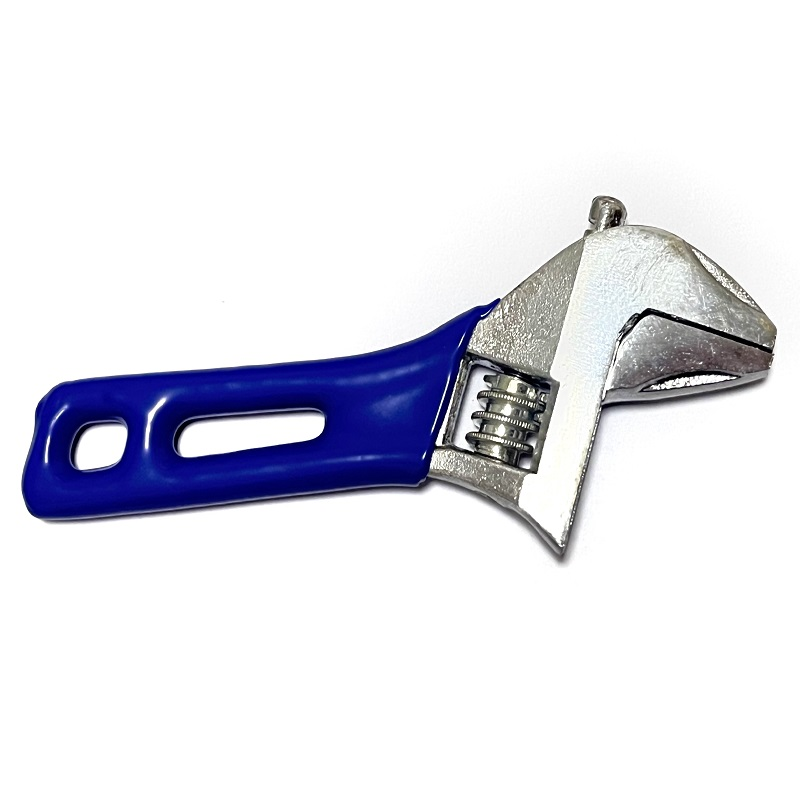
Understanding Dual-Use Requirements: Home Versatility vs. Industrial Reliability
Home Use Demands: Low-frequency torque, compact storage, and user-friendly ergonomics
What homeowners really want in a ratchet wrench set is something that gets the job done without taking over their whole garage. Most folks only reach for these tools when putting together IKEA furniture or fixing a flat tire on the car. They need enough torque to tighten bolts but nothing crazy heavy duty stuff. Storage matters a lot too. Nobody wants their wrenches rolling around everywhere. Stackable trays work wonders here, cutting down on clutter by almost half compared to just tossing everything in a box. Look for handles that feel good in the hand, especially if gripping power matters when working on those stubborn nuts. The direction lever should be easy to flip without fumbling around. A decent starter set usually has between 30 and 40 pieces covering all the common sizes. That's plenty for regular home projects without breaking the bank or needing specialty tools nobody ever uses.
Industrial Use Demands: High-cycle durability, ANSI/ISO compliance, and load-rated performance
In real industrial environments, tools need to stand up to constant punishment day after day. For ratchets meant for high volume work, manufacturers typically specify chromium vanadium steel heads hardened between 50 and 55 on the Rockwell scale. These heads can handle over 10 thousand engagements before showing any sign of tooth wear. Meeting both ANSI B107.5 and ISO 6789 standards isn't just about paperwork either—it's essential for keeping dimensions accurate and torque consistent across all operations. Think about what happens when bolts fail in aerospace or heavy manufacturing contexts. The financial hit from such failures often tops seven hundred forty thousand dollars when considering both direct losses and downstream impacts. Tools rated for at least 250 foot pounds of working torque simply won't deform catastrophically under maximum stress situations. Most quality ratchets feature reinforced anvils along with dual pawl systems that keep torque variance within plus or minus three percent even after thousands of cycles. Independent testing organizations regularly validate these claims, which makes sense given how expensive unexpected production stoppages can be compared to replacing worn out tools.
Evaluating Core Ratchet Wrench Set Performance Features
Tooth Count & Swing Arc: Why 96–120 teeth enable <5° engagement in tight spaces
More teeth on a ratchet means smaller movements needed between clicks, which matters a lot when trying to work around tight spaces or obstacles. Looking at what's happening in workshops across the country, we find that ratchets with around 96 teeth typically need just 4 to 5 degrees of movement before clicking again. Some high end models with 120 teeth can get down to under 3.5 degrees. That makes all the difference when turning bolts in places where a full rotation isn't possible. Older style ratchets with only 72 teeth need about 10 degrees of space to work properly, something that simply doesn't exist in today's compact engine compartments or inside complex machinery. Anyone who regularly works in cramped conditions should seriously consider getting a wrench set with at least 96 teeth. It cuts down on unnecessary movements and keeps those precious fasteners from getting damaged or rounded off over time.
Head Design Options: Flex-head, stubby, and standard—matching access needs to application type
- Flex-head wrenches pivot up to 180°, maintaining fastener contact around obstacles like hydraulic lines or brackets. Leading manufacturers reinforce these joints to withstand ≥200 ft-lbs while preventing unintended angle shifts during torque application.
- Stubby designs provide clearance in depth-limited cavities—such as between engine blocks and firewall—though their shortened handles reduce maximum leverage by ~30% versus standard versions.
- Fixed-head ratchets deliver uncompromised strength for high-torque industrial applications but lack adaptability in complex assemblies.
Prioritize flex-head models for automotive or HVAC work, and combine standard and stubby options for production-line maintenance where access patterns are predictable.
Material Science and Build Quality: What Makes a Ratchet Wrench Set Last
Chrome vanadium (Cr-V) steel: Heat treatment, tensile strength (180–220 ksi), and fatigue resistance
How long a ratchet wrench set lasts really depends on what it's made from at the molecular level. Most quality sets start with chrome vanadium (Cr-V) steel because this alloy strikes just the right balance between being hard enough to handle tough jobs and tough enough to survive daily wear and tear. When manufacturers properly heat treat raw Cr-V steel through controlled quenching and tempering processes, they get that sweet spot where the metal reaches around 180 to 220 ksi tensile strength. What does this mean practically? The wrench won't bend out of shape when tightening bolts but still has enough flexibility to avoid snapping unexpectedly. Chromium in the mix helps fight rust, while vanadium creates finer grain structures that make the tool last longer through constant use. Studies show that when done right, Cr-V steel can take about three times as many stress cycles before breaking compared to regular carbon steel. This translates to fewer stripped bolts, damaged fasteners, and broken tools whether someone is working on weekend DIY projects or running an assembly line all day.
Total Value Assessment: Cost, Warranty, and Lifecycle ROI of a Premium Ratchet Wrench Set
When looking at premium ratchet wrench sets, there are really three main things to consider: what it costs at first, how long it lasts, and whether it pays for itself over time. Good quality tools will cost about half to two thirds more than cheaper options upfront, but they tend to last 3 to 5 times longer when used daily in tough industrial settings where budget tools wear out fast. The lifetime warranty matters a lot too since replacing broken tools can be expensive, especially when shop downtime runs around $500 per hour. Homeowners generally find that mid range models with 10 year guarantees work fine for occasional DIY jobs. Pros need to look for brands that replace tools without hassle because according to industry reports, this kind of policy cuts down on lost time due to faulty equipment by roughly 40%. Ultimately, finding the right balance between what we spend now versus what we get back over many years makes all the difference in our bottom line.
FAQs
What type of ratchet wrench is suitable for home use?
A ratchet wrench set suitable for home use focuses on low-frequency torque and user-friendly ergonomics, with typically 30 to 40 pieces.
What are some key features to look for in industrial ratchet wrench sets?
For industrial use, consider tools with high-cycle durability, chromium vanadium steel heads, and compliance with ANSI/ISO standards.
How does the tooth count impact a ratchet wrench's performance?
Higher tooth counts allow for smaller movements and are beneficial in tight spaces, enabling efficient usage with minimal angular movement.
Why is chrome vanadium (Cr-V) steel preferred for ratchet wrenches?
Cr-V steel is preferred due to its balance of hardness, tensile strength, and resistance to wear and fatigue, offering long-lasting performance.
Table of Contents
- Understanding Dual-Use Requirements: Home Versatility vs. Industrial Reliability
- Evaluating Core Ratchet Wrench Set Performance Features
- Material Science and Build Quality: What Makes a Ratchet Wrench Set Last
- Total Value Assessment: Cost, Warranty, and Lifecycle ROI of a Premium Ratchet Wrench Set
- FAQs