 EN
EN

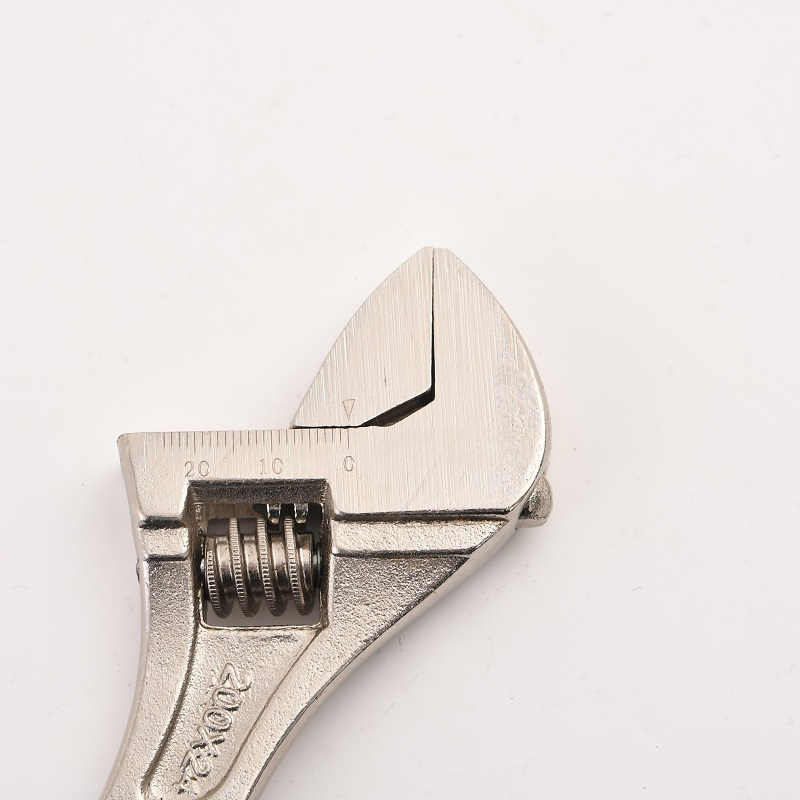
Clean Your Wrench After Every Use to Prevent Corrosion and Debris Buildup
Why immediate cleaning is critical for wrench longevity
Post-use cleaning halts electrochemical corrosion before it begins. Residue—especially salts, acids from skin oils, or coolant splatter—combines with ambient moisture to degrade protective surface layers. Left untreated, this leads to pitting that weakens structural integrity and compromises precision jaw alignment. Debris trapped in ratcheting mechanisms also acts as abrasive grit, accelerating wear on gears and pawls. Tools cleaned within 30 minutes of use last up to 40% longer than those cleaned hours later—primarily because early intervention preserves dimensional accuracy and prevents irreversible surface degradation.
Safe, material-appropriate cleaning methods for chrome-vanadium and other wrench finishes
Different finishes demand precise care to avoid compromising corrosion resistance or grip texture:
| Material | Cleaning Method | Protection Tip |
|---|---|---|
| Chrome-vanadium | Mild detergent + soft brush; rinse fully | Dry immediately with microfiber |
| Nickel-plated | Isopropyl alcohol wipe | Avoid abrasive pastes |
| Black oxide | Dry cloth only | Apply light mineral oil coat |
For chrome-vanadium wrenches—the industry standard for professional durability—use only pH-neutral cleaners. Alkaline solutions strip the chromium oxide layer, leaving metal vulnerable. Dislodge debris from jaw teeth using plastic picks (never metal), then dry thoroughly with compressed air before applying protectant. This maintains both anti-corrosion performance and tactile control without dulling textured surfaces.
Lubricate and Protect Wrench Surfaces Against Rust and Wear
Targeted lubrication points on ratcheting and adjustable wrenches
Apply lubricant only where metal-to-metal contact occurs: gear teeth and reversing lever pivots on ratcheting models; worm screw threads and jaw sliding rails on adjustable wrenches. Work the lubricant in by operating each mechanism five to six times, then wipe away excess with a lint-free cloth. Over-lubrication attracts dust and grime, which accelerates wear instead of preventing it. Consistent, precise application reduces friction-related wear by up to 30%, according to industrial hand tool maintenance studies.
Choosing the right rust-inhibiting protectant: mineral oil vs. specialty sprays
Match your protectant to usage conditions—not just convenience. Mineral oil offers low-cost, short-term protection but requires reapplication after every cleaning and performs poorly in humid or dusty environments. Specialty sprays like Boeshield T-9® or silicone-based formulations displace moisture on contact and form durable hydrophobic barriers lasting 8–12 weeks—even under salt-laden or high-humidity conditions.
| Protectant Type | Protection Duration | Environmental Suitability | Maintenance Frequency |
|---|---|---|---|
| Mineral Oil | 2–4 weeks | Low humidity environments | After each cleaning |
| Specialty Sprays | 8–12 weeks | High humidity/salt exposure | Quarterly application |
In workshops near coastal areas or with seasonal humidity spikes, specialty sprays deliver measurable gains in long-term corrosion resistance—and eliminate the need for frequent reapplication that can lead to inconsistent coverage.
Inspect for Damage and Structural Degradation Before Each Use
Essential visual and tactile inspection checklist for all wrench types
A 30-second pre-use check catches problems before they compromise safety or performance. Start visually: scan for cracks, chips, or active corrosion on handles and jaws. Then feel for bends, warping, or unevenness that affects grip stability. Test moving parts—ratchet action should be smooth and silent; no grinding or sticking. Specifically:
- Verify jaw profiles remain sharp and parallel (no rounding or misalignment)
- Confirm fastener teeth are intact and undamaged, especially on adjustable models
- Check high-stress zones—like the transition between handle and jaw—for rust, pitting, or micro-cracks
This simple routine identifies early-stage wear before it escalates into functional failure during high-torque tasks.
When to retire a wrench: recognizing irreversible wear beyond jaw profile or tooth damage
Retire a wrench immediately if inspection reveals any of the following:
- Jaw spread exceeding 5% of original width (measured at the widest point across the opening)
- Stripped or deformed ratchet teeth or fractured pawl springs
- Bent or twisted handles detectable by sight or feel
- Deep pitting or microfractures visible under 10× magnification
Such defects violate ANSI/ASME B107.100 structural safety requirements and increase slip risk by over 40% under load. Replacement—not repair—is the only safe response.
Store Your Wrench Properly to Minimize Environmental and Mechanical Stress
Proper storage is preventive maintenance—not just organization. Moisture, dust, impact, and residual tension all accelerate degradation: corrosion eats at surfaces, debris infiltrates mechanisms, and unrelieved stress distorts precision components. Follow these evidence-backed practices:
- Control environmental conditions: Store in dry, temperature-stable spaces (ideally below 40% relative humidity). Research published in the Materials Degradation Journal (2024) confirms tools stored in humid environments corrode three times faster than those in climate-controlled settings.
- Prevent mechanical stress: Use foam-lined drawers, molded cases, or wall-mounted hooks to isolate tools. Never stack heavy items on top—impact dents compromise jaw geometry and torque transfer.
- Release tension mechanisms: For torque wrenches, always reset to the lowest calibrated setting before storage to preserve spring elasticity and calibration integrity.
- Isolate batteries: Remove power sources from cordless wrenches to prevent contact corrosion and battery leakage—a leading cause of internal circuit damage.
- Organize strategically: Assign individual slots or hooks to prevent collisions. Tool-on-tool contact is the top cause of jaw deformation in adjustable wrenches, per field data from industrial maintenance audits.
Implementing even three of these practices extends functional lifespan by up to 60% compared to unstructured storage, according to longitudinal studies across automotive and manufacturing facilities.
Avoid High-Risk Usage Habits That Shorten Wrench Lifespan
Torque Overload and Improper Leverage: How Misuse Distorts Jaw Geometry and Ratchet Mechanisms
Wrenches are engineered for defined torque limits—and exceeding them causes controlled, permanent deformation. Standing on a handle or using an unapproved extender doesn’t just risk injury; it warps box-end jaw profiles, creating gaps that slip off fasteners. Open-end jaws twist under overload, reducing effective contact area by up to 40%. In ratcheting models, excessive force strips gear teeth or fractures delicate pawl springs—damage that cannot be reversed through recalibration or cleaning.
Striking Non-Impact Wrenches and Using Cheater Pipes—Violations of ANSI/ASME B107.100 Safety Standards
Standard wrenches are not impact-rated. Striking them with hammers introduces microfractures into chromium-vanadium steel—hidden flaws that propagate under load and increase catastrophic failure risk. Likewise, “cheater pipes” (improvised handle extensions) multiply applied torque unpredictably—often exceeding design limits by 300% or more. This bends torsion rods, misaligns drive squares, and voids manufacturer warranties. Both practices violate ANSI/ASME B107.100 safety standards and significantly raise the likelihood of tool failure—and user injury—during subsequent use.
FAQs
How often should I clean my wrench?
It's recommended to clean your wrench immediately after each use, ideally within 30 minutes, to prevent corrosion and debris buildup.
What's the best way to store wrenches to prevent damage?
Store wrenches in a dry, temperature-stable environment using foam-lined drawers or molded cases, and release tension mechanisms for torque wrenches.
When should I retire a wrench?
Retire any wrench with jaw spread exceeding 5% of the original width, stripped ratchet teeth, or visible microfractures under magnification.
What are the risks of using 'cheater pipes' on wrenches?
'Cheater pipes' can exceed design torque limits, bending components and voiding warranties, while significantly raising failure risk.
Table of Contents
- Clean Your Wrench After Every Use to Prevent Corrosion and Debris Buildup
- Lubricate and Protect Wrench Surfaces Against Rust and Wear
- Inspect for Damage and Structural Degradation Before Each Use
- Store Your Wrench Properly to Minimize Environmental and Mechanical Stress
- Avoid High-Risk Usage Habits That Shorten Wrench Lifespan
- FAQs