 EN
EN

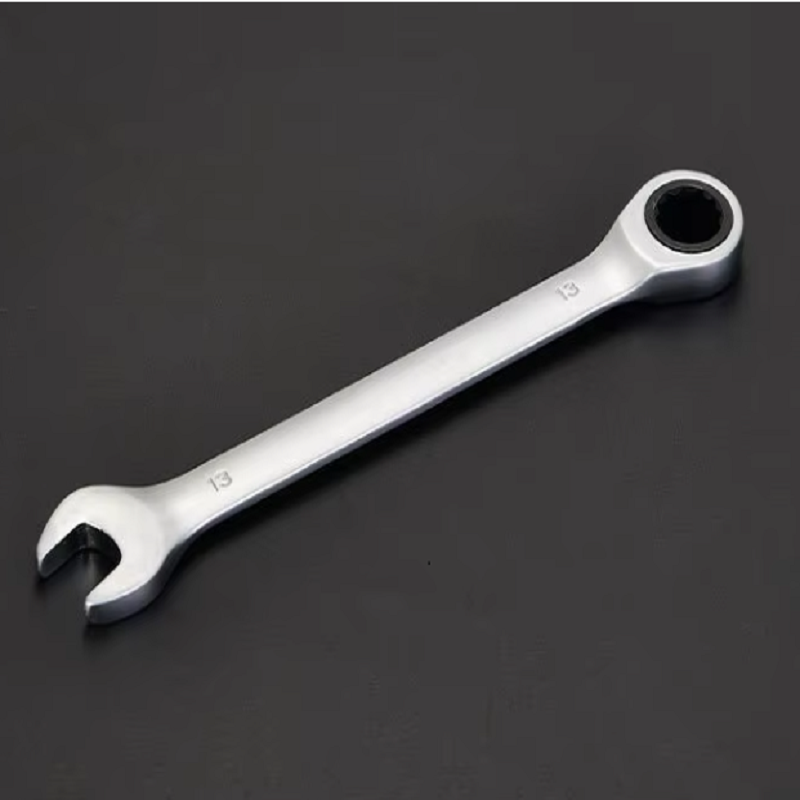
Precision Ratcheting Mechanism: The Defining Feature of a High-Performance Ratchet Wrench
72-Tooth Design and Sub-5° Swing Arc for Maximum Access in Tight Spaces
High-performance ratchet wrenches achieve unparalleled efficiency through advanced tooth geometry—72-tooth designs are now the professional standard. This configuration delivers a swing arc under 5°, enabling reliable operation where traditional wrenches require 30°+ clearance, such as around engine blocks or confined plumbing assemblies. More teeth translate to shorter rotational increments between engagements, reducing repositioning frequency by 60% compared to 36-tooth models, per mechanical efficiency studies. That precision directly accelerates complex repairs when paired with low-clearance sockets, glove-friendly directional switches, and thin-profile heads that avoid interference with adjacent components.
Pawl-and-Gear Engineering: Tolerance Control, Engagement Depth, and ISO/SAE Compliance
Reliability hinges on microscopic precision at the pawl-and-gear interface, where engagement depth must exceed 0.3 mm to prevent slippage under load. Leading manufacturers achieve this using CNC-machined components held to ±0.01 mm tolerances—exceeding both ISO 6789 and SAE J995 standards for industrial hand tools. This rigor mitigates two critical failure modes:
| Failure Mode | Cause | Prevention Mechanism |
|---|---|---|
| Backdrag | Excessive spring tension | Calibrated coil springs maintaining <2.5 Nm resistance |
| Tooth rounding | Shallow engagement | Hardened alloy steel with 60+ Rockwell C hardness |
Thermal cycling tests show compliant mechanisms withstand 15,000+ direction changes at 250 Nm loads without degradation—a key differentiator from consumer-grade tools, where plastic deformation typically occurs before 5,000 cycles. This ensures consistent torque transfer across extreme operating conditions, from suspension bolt tightening at –20°C to exhaust manifold work at 150°C.
Advanced Materials and Heat Treatment: Building Durability into Every Ratchet Wrench
Chromium Vanadium vs. Chromium Molybdenum Alloys: Yield Strength, Fatigue Resistance, and Real-World Longevity
Premium ratchet wrenches leverage metallurgical science to surpass industry stress thresholds. Chromium vanadium (Cr-V) alloys deliver a balanced 150,000 PSI yield strength—ideal for general applications—while chromium molybdenum (Cr-Mo) variants offer superior fatigue resistance, enduring 50% more load cycles before failure in ASTM F1574 testing. The decisive factor is carburization depth during heat treatment: precision-controlled case hardening creates a wear-resistant surface while preserving a shock-absorbing core. This dual-phase structure prevents catastrophic failures, with Cr-Mo wrenches lasting 2.8× longer in heavy industrial use, according to 2024 tool longevity benchmarks.
Corrosion-Resistant Coatings and Dimensional Stability Under Thermal and Mechanical Stress
Surface engineering extends durability where base alloys reach their limits. Advanced electrophoretic coatings deposit uniform 15–25 μm protective layers that withstand 500+ hours of salt spray testing (ASTM B117)—four times longer than traditional plating. Thermal management is equally vital: at sustained 100°C temperatures, untreated alloys exhibit 0.3% dimensional drift versus just 0.05% in stabilized variants. Modern salt bath nitrocarburizing simultaneously boosts surface hardness to 60 HRC and compresses the molecular structure, reducing thermal expansion coefficients by 40%. This synergy ensures nanometric tolerances hold firm—even after 50,000 torque cycles.
Ergonomic and Application-Driven Geometry: Optimizing Leverage and Usability
Stubby, Flex-Head, and Offset Configurations: Physics-Based Advantages for Confined Ratchet Wrench Use
High-performance ratchet wrenches maximize efficiency in tight spaces through purpose-built geometries. Stubby designs prioritize clearance over handle length, transferring torque laterally without obstruction in recessed panels. Flex-head configurations pivot up to 90°, maintaining socket contact on angled fasteners inaccessible to rigid tools. A 15° offset handle elevates knuckles above work surfaces, preventing impact injuries during rapid ratcheting. Industry studies confirm ergonomic handles reduce operator fatigue by up to 63% during repetitive tasks. These features solve real-world constraints: stubby profiles access engine compartment bolts behind hydraulic lines; flex heads tighten suspension components around CV joints; and offset grips clear crossmembers during chassis repairs—each leveraging mechanical advantage where conventional wrenches fall short.
Torque Transfer Integrity and Multi-Functional Compatibility
Precise torque delivery separates professional-grade ratchet wrenches: deviations exceeding ±5% risk fastener integrity. Under-torque invites vibrational loosening; over-torque strains hardware beyond yield strength—both leading causes of premature hardware failure in industrial maintenance. Optimized power transmission demands perfect alignment between drive tangs and socket squares; even 0.1 mm misalignment introduces parasitic energy losses. Multi-functional designs accommodate diverse needs via ¼" to ½" drive converters and universal joint attachments, enabling single-tool operation across ISO and SAE fastener systems. This cross-compatibility eliminates workspace clutter while sustaining ≥90% torque efficiency when switching between metric and imperial sockets—proving indispensable in confined automotive and aerospace applications.
Frequently Asked Questions
What is the advantage of a 72-tooth design in ratchet wrenches?
A 72-tooth design allows for a swing arc under 5°, making it ideal for tight spaces and reducing repositioning frequency by 60% compared to 36-tooth models.
Why is CNC machining important for pawl-and-gear components in ratchet wrenches?
CNC machining ensures precision by maintaining tight tolerances, preventing common failures like slippage or tooth rounding.
What materials improve the durability of ratchet wrenches?
Materials such as chromium vanadium and chromium molybdenum alloys, enhanced through carburization and electrophoretic coatings, improve durability and resistance to stress.
How do ergonomic designs enhance ratchet wrench usage?
Ergonomic designs reduce operator fatigue and allow for easy maneuvering in confined spaces, enhancing user efficiency and safety.
What is the significance of torque transfer integrity in ratchet wrenches?
Maintaining precise torque delivery is crucial to avoid fastener failures, ensuring that hardware is neither too loose nor strained beyond capacity.
Table of Contents
- Precision Ratcheting Mechanism: The Defining Feature of a High-Performance Ratchet Wrench
- Advanced Materials and Heat Treatment: Building Durability into Every Ratchet Wrench
- Ergonomic and Application-Driven Geometry: Optimizing Leverage and Usability
- Torque Transfer Integrity and Multi-Functional Compatibility
-
Frequently Asked Questions
- What is the advantage of a 72-tooth design in ratchet wrenches?
- Why is CNC machining important for pawl-and-gear components in ratchet wrenches?
- What materials improve the durability of ratchet wrenches?
- How do ergonomic designs enhance ratchet wrench usage?
- What is the significance of torque transfer integrity in ratchet wrenches?