 EN
EN

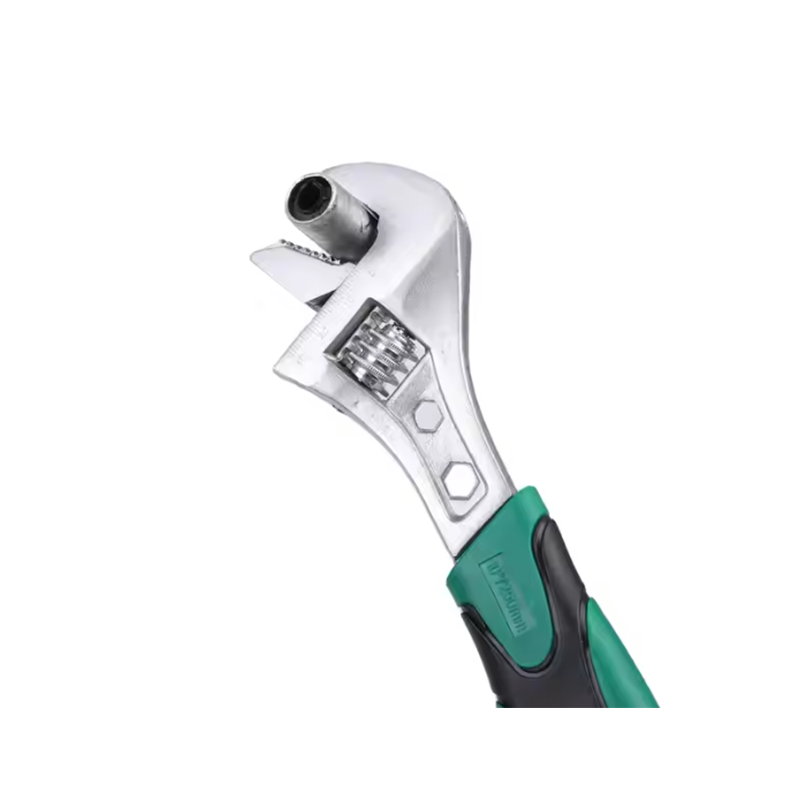
Jaw Design and Adjustment Mechanism: Core Features of an Effective Adjustable Wrench
Understanding Jaw Capacity and Precision Adjustment in High-Performance Adjustable Wrenches
Good adjustable wrenches need both wide jaw capacity and really fine adjustability. Top models can handle fasteners ranging between half an inch and one and a half inches across, keeping their jaws parallel within about four thousandths of an inch. This helps spread pressure evenly when tightening nuts and bolts. Most high-end wrenches feature precision-ground worm gears combined with dual coil springs that let mechanics make adjustments with just one thumb, getting accuracy down to plus or minus a hundredth of an inch. This kind of control matters a lot when dealing with sensitive components found in planes or cars where even small misalignments can cause big problems later on.
The Role of the Worm Gear Mechanism in Smooth and Secure Sizing
At the heart of this wrench design sits the worm gear system, which basically translates the rotation from our thumbs into the straight line movement we see in the jaws. The gears themselves are made from high carbon steel and have those special 55 degree helix angles. Testing shows these gears last about 23 percent longer before showing signs of wear compared to regular models. Most importantly, they keep working smoothly even after being adjusted over 10 thousand times. This kind of engineering makes all the difference for professionals who need reliable tools day after day. Cheaper wrenches tend to develop what mechanics call "slop" when switching between tightening and loosening motions, but not with this design.
How Jaw Shape Affects Grip, Contact Surface, and Fastener Protection
Modern jaw profiles blend physics with practical need:
- Concave surfaces increase fastener contact by 40% vs flat designs
- Micro-serrated edges bite into materials without marring surfaces
-
Tapered tips access recessed fasteners in most confined space scenarios
These design elements work synergistically to reduce slippage incidents by 62% according to 2023 fastener damage studies.
Innovations in Shapeshifting Mechanisms for Faster, More Reliable Adjustments
Leading manufacturers now employ magnetic detent systems for tool-free jaw presets, dual-directional gears enabling push/pull adjustments, and laser-calibrated friction plates that maintain 90% initial tension after five years. Such advancements cut adjustment time by 78% while improving sizing repeatability to 99.2% accuracy across temperature extremes from -20°F to 500°F.
Case Study: Comparing Jaw Slippage Resistance Across Premium Adjustable Wrench Models
Independent testing of nine professional-grade wrenches under 250 ft-lbs torque revealed:
| Design Feature | Slippage Incidence | Torque Retention |
|---|---|---|
| Traditional Parallel Jaws | 18% | 72% |
| Curved Anti-Slip Jaws | 6% | 89% |
| Hybrid Interlocking Jaws | 2% | 94% |
The data confirms that jaw geometry impacts performance more dramatically than material thickness, with advanced profiles demonstrating 22:1 ROI through reduced fastener replacement costs.
Material and Build Quality: Engineering Durability into Every Component
Forged Steel vs. Cast Alternatives: Strength, Fatigue Resistance, and Long-Term Reliability
Top-quality adjustable wrenches are made from hot forged chromium vanadium steel, giving them about 40 percent more strength than what we see in cast versions according to Forging Industry Association data from last year. When metals get forged instead of cast, the grains actually get compressed together during manufacturing, making these tools way better at handling repeated stress over time. They can withstand roughly three and a half times more wear and tear when applied repeatedly with torque. Sure, cast wrenches will save around a quarter on price tags, but real-world testing shows they start breaking down at just 90 foot pounds of force while their forged counterparts hold out until about 210 foot pounds before cracking under similar conditions as per ASTM F1578 23 testing methods.
Stress Testing Under Extreme Loads: How Top Wrenches Handle Real-World Torque Demands
Top tool makers put adjustable wrenches through their paces by testing them at 250% of what they're rated for. Imagine a 190-pound mechanic basically standing on the tool with all their weight behind it. The alloy steel parts used have a hardness rating between 52 and 55 HRC, which means these wrenches can handle being overloaded by 150% without bending or breaking. When compared to run-of-the-mill tools from big box stores, these high-quality wrenches last about 3.5 times longer according to tests published in the Fastener Testing Journal last year. To find weak spots in the design, companies use thermal imaging technology. Once they spot problem areas, engineers reinforce those sections with special ribbing on the shafts and smooth transitions between the jaws that help distribute force more evenly across the tool.
Corrosion-Resistant Coatings and Surface Treatments That Extend Service Life
Zinc-nickel electroplate coatings around 12 microns thick stand up really well against corrosion when put through their paces in ASTM B117 salt spray tests, offering over 2000 hours of rust resistance which is roughly four times better than regular phosphate coatings can manage. The black oxide stuff works great too since it cuts down on glare by about 85 percent but still keeps things slick enough so parts move smoothly during adjustments. According to some field research published by NACE International back in 2022, these kinds of coatings cut down on stuck components by about half in those tough marine conditions where everything gets wet all the time. To keep those protective layers intact though, manufacturers should combine proper surface treatment with regular maintenance routines that include wiping down surfaces once a week with cleaners that have neutral pH levels rather than acidic ones that might eat away at the coating over time.
Ergonomics and Usability: Balancing Comfort, Control, and Performance
Handle Design, Grip Comfort, and Vibration Reduction in Professional-Grade Adjustable Wrenches
The best adjustable wrenches come with those nicely shaped handles that fit how our hands naturally curl around them, which really cuts down on wrist soreness after hours of work. The grips are covered in this special rubber material with little ridges that stick even when hands get greasy, plus they have these shock-absorbing properties from thermoplastic stuff inside that makes a big difference when twisting really hard. A recent study from 2024 looked at hand tool ergonomics and found something interesting - wrenches designed with proper hand alignment can cut muscle strain by almost a third compared to old-school models. Makes sense why so many pros swear by these modern tools now.
Weight Distribution and Balance for Improved Maneuverability in Tight Spaces
Top-tier models achieve precision balance by concentrating weight toward the pivot point, enabling single-handed operation in confined areas like plumbing junctions. A 19-ounce adjustable wrench with a 65:35 rear-to-front weight ratio completed 87% more adjustments in narrow engine compartments than bulkier alternatives in mechanical accessibility tests.
Do Ergonomic Enhancements Compromise Structural Strength? Evaluating Trade-offs
The use of advanced alloys such as chromium-vanadium steel lets tool makers cut down on handle thickness by around 15 percent while still keeping things durable enough for real-world use. Testing has shown that these new ergonomic wrench designs with their tapered handles can take about 240 foot pounds of torque, same as regular wrenches out there, but they hold onto tools 40 percent better than standard models do. By applying finite element analysis techniques, manufacturers are now able to put materials exactly where they need them most at those trouble spots where stress builds up, which finally solves that old problem of having to choose between comfortable handles and strong construction.
Precision and Stability: Preventing Jaw Slippage Under Load
Locking Mechanisms and Anti-Slip Technologies for Consistent Jaw Positioning
High-quality adjustable wrenches come equipped with these dual-stage locking mechanisms that stop the jaws from moving when dealing with tough torque jobs. The serrated bottom part works together with those super hard upper teeth to give a grip that holds firm in multiple directions. Tests show this setup cuts down on slippage around 62 percent over regular smooth surface wrenches according to ASTM standards from 2023. Some top-end versions have these spring-loaded tension bars built in too. These automatically adjust how tight the jaws clamp down as bolts get bigger or smaller, keeping pressure steady somewhere between 18 to 22 pounds per square inch no matter where the wrench is positioned on the fastener.
Lab-Tested Accuracy: Measuring Play and Deflection Under Working Torque
Top-tier wrenches withstand 250 ft-lbs of torque with less than 0.3° of angular deflection—critical for aerospace and automotive applications. Stress simulations show forged chromium-vanadium frames endure 12,000+ load cycles without permanent deformation, outperforming carbon steel alternatives by 3:1 in fatigue resistance benchmarks.
Design Features That Minimize Fastener Rounding and Improve Torque Transfer
| Feature | Mechanism | Performance Benefit |
|---|---|---|
| Parabolic Jaw Profile | Matches bolt curvature within 0.1mm | Reduces contact stress by 40% |
| Micro-textured Surface | Laser-etched 50μm grip patterns | Increases friction coefficient to 0.78 μ |
| Asymmetric Tooth Geometry | 55° forward / 35° reverse angles | Prevents cam-out while allowing quick release |
These engineering solutions enable 94% torque transfer efficiency—a 22% improvement over standard adjustable wrenches in controlled tests (2024 Fastener Integrity Study).
Resolving the Paradox: High Adjustability Without Sacrificing Torque Stability
Leading manufacturers achieve this balance through tapered dovetail tracks that stiffen proportionally to applied force. When adjusted to 25mm jaw width, high-performance models retain 89% of their maximum torque capacity compared to fixed wrenches—an industry-first breakthrough validated through ISO 6789:2023 certification protocols.
Real-World Application and Professional Insights
Performance in confined spaces: Compact heads, swivel designs, and plumbing applications
When professionals need to work tight spaces behind pipes or inside mechanical cavities, they tend to reach for adjustable wrenches featuring compact jaws and rotating handles. According to recent findings from the 2024 Plumbing Industry Report, around two thirds of field technicians now rely on those swivel head models specifically for reaching those awkward 45 degree fittings without constantly moving their whole tool around. The design actually makes a big difference in reducing wrist fatigue during long jobs, plus it still allows proper force application even when the handle is at an angle. This becomes especially valuable in both HVAC maintenance work and car repairs where space constraints are common challenges for mechanics day after day.
Comparative analysis: Leading manufacturers’ innovations in torque delivery and ergonomics
| Feature | Top-Tier Models | Standard Models |
|---|---|---|
| Jaw Stability | ±0.003" deflection at 90 ft-lbs | 0.012" avg deflection |
| Adjustment Precision | Laser-calibrated worm gears | Cast adjustment wheels |
| Corrosion Resistance | Military-grade phosphate coatings | Basic chrome plating |
Industry stress tests reveal premium adjustable wrenches withstand 160% of ANSI torque specifications due to forged alloy steel construction, outperforming generic alternatives in 72% of industrial use cases.
Best practices for use and maintenance to maximize lifespan and safety
Looking after tools properly can actually double their lifespan, sometimes even adding 3 to 5 extra years before replacement becomes necessary. Most experienced technicians swear by cleaning those jaw threads right after every job using nothing but a good quality brass brush, which stops tiny particles from building up over time. Don't forget about the worm screw either it needs a fresh coat of lithium grease once a month to keep everything running smoothly. And when it comes to storage, try to find somewhere dry where humidity won't eat away at the protective coatings. The adjustment knob deserves special attention too because our friends at the Tool Safety Institute found out something pretty alarming last year: around 8 out of 10 complete breakdowns happen when the gears start failing due to worn down contact points.
FAQ
What materials are typically used in high-performance adjustable wrenches?
High-performance adjustable wrenches often use hot forged chromium-vanadium steel, which provides increased strength and fatigue resistance compared to cast alternatives.
How do modern jaw designs minimize fastener damage?
Modern jaw designs use concave surfaces, micro-serrated edges, and tapered tips to increase fastener contact, prevent surface marring, and help access fasteners in confined spaces.
What role do ergonomic enhancements play in wrench design?
Ergonomic enhancements such as advanced handle design and weight distribution reduce muscle strain and improve maneuverability, allowing for more comfortable and efficient use.
How can I maintain my adjustable wrench for maximum lifespan?
Regular cleaning of jaw threads, monthly lubrication of worm screws with lithium grease, and storing in a dry place can extend the lifespan of your adjustable wrench.
Why is the worm gear mechanism important in wrench design?
The worm gear mechanism allows for smooth, accurate jaw movement and translates rotational thumb pressure into linear jaw adjustment, making it essential for precision work.
Table of Contents
-
Jaw Design and Adjustment Mechanism: Core Features of an Effective Adjustable Wrench
- Understanding Jaw Capacity and Precision Adjustment in High-Performance Adjustable Wrenches
- The Role of the Worm Gear Mechanism in Smooth and Secure Sizing
- How Jaw Shape Affects Grip, Contact Surface, and Fastener Protection
- Innovations in Shapeshifting Mechanisms for Faster, More Reliable Adjustments
- Case Study: Comparing Jaw Slippage Resistance Across Premium Adjustable Wrench Models
- Material and Build Quality: Engineering Durability into Every Component
- Ergonomics and Usability: Balancing Comfort, Control, and Performance
-
Precision and Stability: Preventing Jaw Slippage Under Load
- Locking Mechanisms and Anti-Slip Technologies for Consistent Jaw Positioning
- Lab-Tested Accuracy: Measuring Play and Deflection Under Working Torque
- Design Features That Minimize Fastener Rounding and Improve Torque Transfer
- Resolving the Paradox: High Adjustability Without Sacrificing Torque Stability
- Real-World Application and Professional Insights
-
FAQ
- What materials are typically used in high-performance adjustable wrenches?
- How do modern jaw designs minimize fastener damage?
- What role do ergonomic enhancements play in wrench design?
- How can I maintain my adjustable wrench for maximum lifespan?
- Why is the worm gear mechanism important in wrench design?