 EN
EN

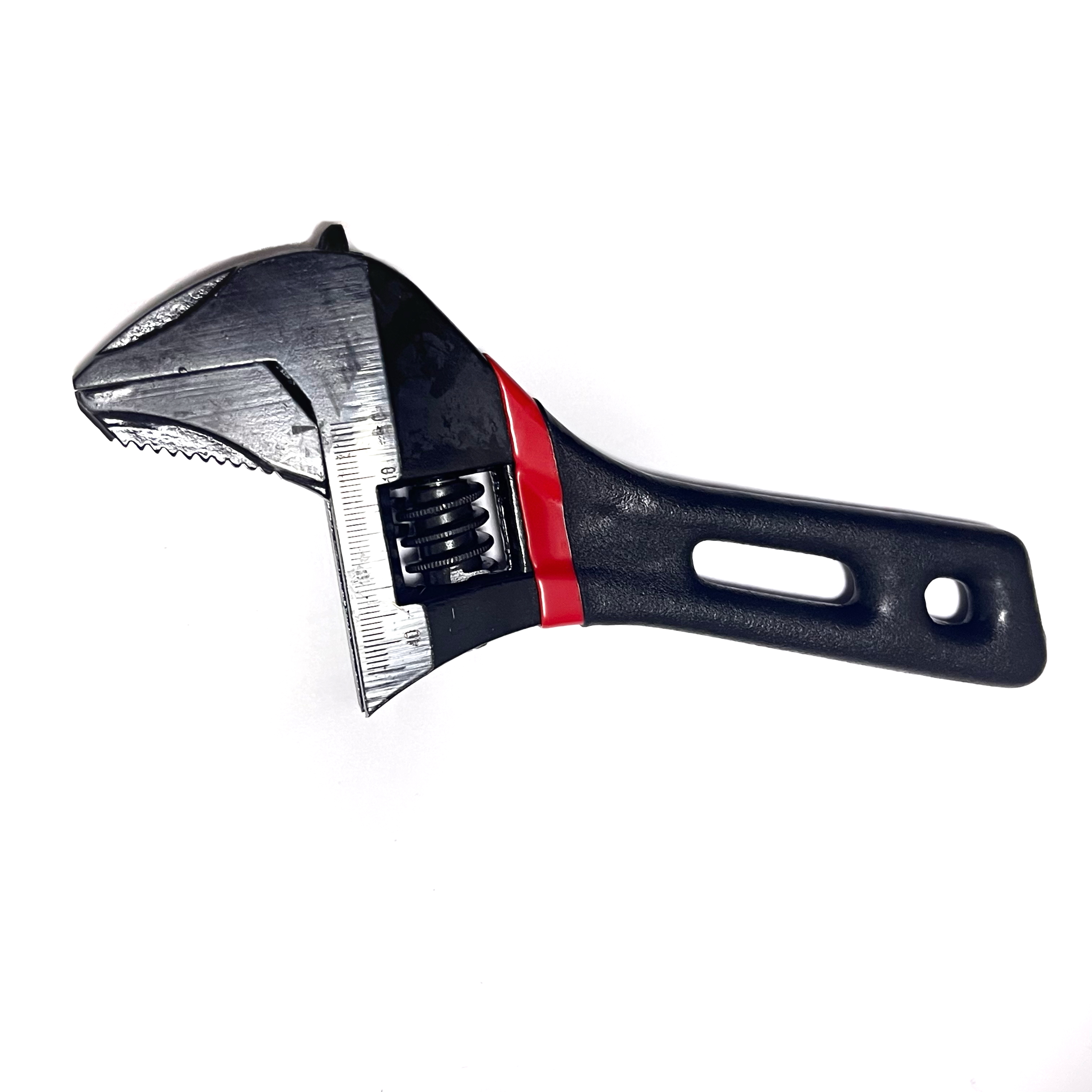
Core Performance Requirements for Heavy-Duty Adjustable Wrenches
Why Standard Adjustable Wrenches Fail Under High Torque Loads
Standard adjustable wrenches often fail under loads exceeding 200 N·m due to inadequate material strength and flawed design. Under high-torque conditions, jaw components deform or fracture, poor teeth engagement causes slippage that damages fasteners, and insufficient hardening leads to premature fatigue failure. In stress testing, standard models showed 42% more fastener rounding incidents than heavy-duty alternatives at 220 N·m—largely because consumer-grade tools rely on basic carbon steel rather than high-grade alloys engineered for industrial demands. When torque requirements exceed light-duty thresholds, these weaknesses compromise both task completion and user safety.
Minimum Torque Thresholds: When You Need ≥250 N·m for Automotive and Industrial Applications
Automotive and industrial environments demand minimum torque capacities of 250 N·m to handle critical fasteners securely—including heavy truck lug nuts (M24–M36), industrial machinery base bolts, and structural steel connections. Independent testing shows applications requiring ≥250 N·m experience 68% fewer tool failures when using wrenches meeting this specification. This benchmark reflects the minimum load capacity where jaw integrity and torque transfer efficiency remain consistent across repeated high-force use; below it, adjustable wrenches risk catastrophic slippage or deformation during heavy-duty tasks.
Material Integrity and Durability: Chrome-Vanadium Steel as the Benchmark
Heat-Treated Chrome-Vanadium Steel: Strength, Fatigue Resistance, and Real-World Reliability
Chrome-vanadium alloy steel is the engineering gold standard for heavy-duty adjustable wrenches, delivering tensile strength exceeding 1,500 MPa and superior fatigue resistance. Precise heat treatment refines its crystalline structure, enabling it to absorb 40% more impact energy than standard carbon steel before microfractures form—critical when tackling seized bolts where sudden torque spikes can exceed 250 N·m. Vanadium enhances wear resistance during repeated jaw adjustments, while chromium prevents stress-induced deformation under load. Independent stress-testing confirms chrome-vanadium wrenches maintain jaw alignment through 10,000+ high-torque cycles—outlasting alternatives by a 3:1 margin in service life.
Corrosion Protection: Electrophoretic Coating vs. Black Oxide in Harsh Environments
Environmental exposure dictates coating selection. Electrophoretic (e-coat) deposition creates a polymer barrier achieving 500+ hours salt-spray resistance—ideal for marine or chemical-processing settings—because its nano-bonded layer prevents subsurface corrosion even when scratched. By contrast, black oxide provides sacrificial surface protection and reduces jaw friction by 15%, enabling smoother fine-tuning for precision tasks in controlled environments. For critical infrastructure maintenance, e-coat’s endurance outweighs its marginal torque drag; in arid workshops, black oxide suffices. Match protection to operating conditions: moisture demands e-coat, while low-humidity applications benefit from black oxide’s slicker mechanics.
Geometry Matters: Jaw Capacity, Handle Length, and Torque Amplification
Matching Jaw Capacity (25–75 mm) to Fastener Classes (M16–M36)
Industrial applications require adjustable wrenches with 25–75 mm jaw openings to accommodate M16–M36 fasteners—common in structural bolts and heavy machinery. Undersized jaws risk damaging fastener heads; oversized models compromise grip precision. For example, M36 bolts demand ≥55 mm capacity to distribute load evenly across contact surfaces. Premium designs achieve this through forged jaws maintaining ≤0.025 mm deflection under 400 N·m loads. Proper sizing ensures full thread engagement without stripping—critical for load-bearing assemblies like bridge joints or turbine mounts.
Handle Length Impact: How 12" vs. 18" Designs Increase Effective Torque by 40–75%
Leverage principles dictate that extended handles multiply applied force: torque (τ) equals force (F) multiplied by lever arm length (d)—τ = F × d. An 18-inch wrench generates 40–75% more torque than a 12-inch counterpart; for instance, 50 lbs of force yields 600 lb·in on a 12" model versus 900 lb·in on an 18" version. Field studies confirm operators reach 250 N·m thresholds 30% faster with longer handles, reducing musculoskeletal strain. Optimal length also prevents jaw disengagement during high-torque automotive or pipeline maintenance.
Precision Adjustment: Worm Gear Mechanisms for Stubborn or Critical Fasteners
Fine-Pitch Worm Gear vs. Standard Rack: Backlash Control and Repeatability (<0.15 mm)
High-stakes applications demand zero margin for error. Standard rack-and-pinion systems exhibit inherent backlash—often exceeding 0.3 mm—causing jaw slippage under load. Fine-pitch worm gear mechanisms eliminate this play through helical tooth engagement, reducing backlash to <0.15 mm (Journal of Mechanisms and Robotics, 2015). This precision enables three critical advantages:
- Repeatable clamping force, securing irregular or flared fasteners without re-adjustment
- Anti-slip performance, maintaining grip at maximum torque loads
- Micro-adjustment capability, allowing 0.1 mm incremental jaw movements for damaged fasteners
Automotive suspension work exemplifies this need—where 1° of bolt rotation error can alter wheel alignment by 3 mm. Fine-pitch gears ensure fastener positioning remains consistent across 200+ disassembly cycles. For critical infrastructure—such as pressurized pipelines—this precision prevents catastrophic joint failure caused by incremental torque loss from backlash-induced vibration.
FAQ
Why do standard adjustable wrenches fail under high torque loads?
Standard wrenches often fail due to inadequate material strength, poor design, and insufficient hardening processes, resulting in jaw deformation, slippage, and fatigue failure under high torque.
What torque capacity is needed for automotive and industrial tasks?
A minimum torque capacity of 250 N·m is essential for automotive and industrial tasks requiring secure handling of heavy-duty fasteners.
What makes chrome-vanadium steel ideal for heavy-duty adjustable wrenches?
Chrome-vanadium steel provides superior tensile strength, fatigue resistance, and wear resistance, making it highly durable for industrial use.
What are the benefits of electrophoretic coating compared to black oxide?
Electrophoretic coating offers superior corrosion resistance in humid and marine environments, while black oxide reduces friction and is more suitable for dry, controlled settings.
How does handle length impact torque generation?
Longer handles amplify torque output significantly, with an 18" wrench generating up to 75% more torque than a 12" model.
What are fine-pitch worm gear mechanisms, and why are they better?
Fine-pitch worm gears reduce backlash to under 0.15 mm, ensuring precise, repeatable clamping force, anti-slip performance, and micro-adjustments for critical fasteners.
Table of Contents
- Core Performance Requirements for Heavy-Duty Adjustable Wrenches
- Material Integrity and Durability: Chrome-Vanadium Steel as the Benchmark
- Geometry Matters: Jaw Capacity, Handle Length, and Torque Amplification
- Precision Adjustment: Worm Gear Mechanisms for Stubborn or Critical Fasteners
-
FAQ
- Why do standard adjustable wrenches fail under high torque loads?
- What torque capacity is needed for automotive and industrial tasks?
- What makes chrome-vanadium steel ideal for heavy-duty adjustable wrenches?
- What are the benefits of electrophoretic coating compared to black oxide?
- How does handle length impact torque generation?
- What are fine-pitch worm gear mechanisms, and why are they better?