 EN
EN

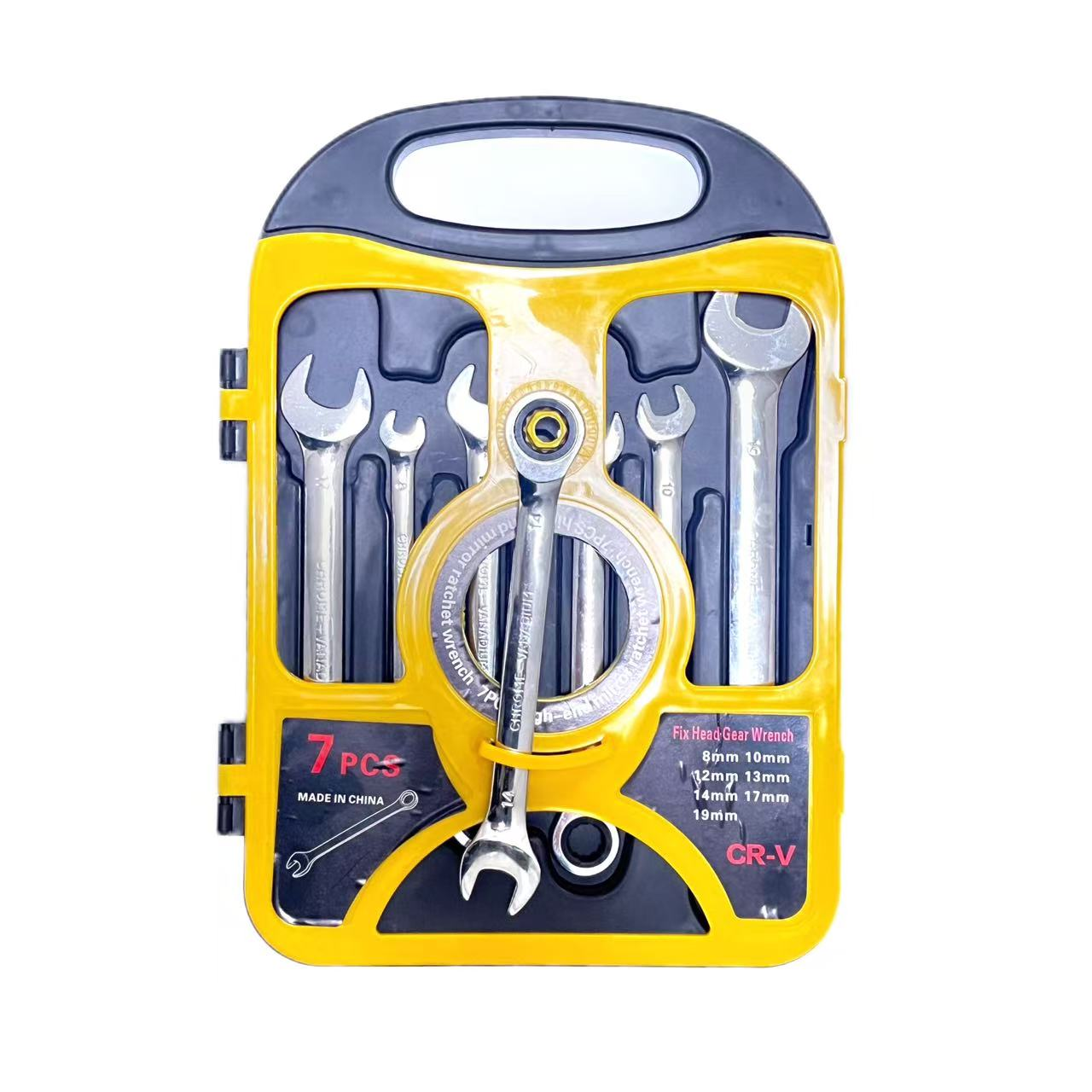
The Ratchet Mechanism: Core Physics Behind Motion Efficiency
How pawl-and-gear engagement enables continuous unidirectional torque with minimal backswing
The ratchet wrench set outperforms traditional tools through its foundational pawl-and-gear locking mechanism. As the drive gear rotates under applied force, spring-loaded pawls engage with gear teeth to prevent backward motion—enabling continuous unidirectional torque without repositioning. This eliminates wasted motion, reducing it by 60% compared to open-end wrenches during repetitive tasks, per industrial time-motion studies. The sealed system maintains consistent socket-to-fastener contact, translating kinetic energy more efficiently and achieving 22% faster fastener rotation in assembly-line testing.
Measurable motion economy: 5°–15° swing arcs vs. 30°+ for standard wrenches
Precision gear machining enables drastically reduced swing angles—typically 5°–15° versus 30°+ for standard wrenches. This condensed arc transforms high-torque applications:
- Space efficiency: Operates reliably in 25 mm clearance zones where conventional tools cannot engage
- Time savings: Completes 12 bolt cycles in the time standard wrenches finish 8
- Force optimization: Requires 40% less wrist rotation per task, aligning with OSHA ergonomic guidelines
Industrial analyses show mechanics using coarse-tooth ratchets (e.g., 24–36 teeth) experience 17% longer task durations than those using fine-tooth mechanisms (72–120 teeth). The physics is clear: narrower swing arcs minimize kinetic energy loss during direction changes—directly boosting work efficiency.
Confined-Space Performance: Why Compact Ratchet Wrench Sets Excel in Tight Areas
Sub-8° Swing Angles Enabling Fastener Access in <25 mm Clearance Zones
High-tooth-count ratchet mechanisms (72–120 teeth) achieve operational arcs as low as 3°–5°—far below the 30°+ required by fixed wrenches. This engineering enables access to fasteners in spaces under 25 mm wide, such as between tightly packed engine components. As noted in Norton’s Machine Design: An Integrated Approach, premium ratchet wrench sets reduce required clearance by 75% compared to fixed tools, while field tests confirm a 40% reduction in slippage incidents during confined-space operations. The compact head design (typically ≤14 mm thickness) further optimizes access in ultra-restricted zones.
Real-World Validation: Engine Bay Repairs and HVAC Ductwork Applications
In automotive settings, mechanics leverage sub-8° swing angles to service alternator bolts and transmission assemblies where component spacing averages just 18–22 mm. HVAC technicians similarly benefit when securing ductwork panels in ceiling plenums—5°–10° swing arcs cut required handle movements by 40% versus standard tools. Flex-head variants add 30°–90° articulation, decreasing hand repositioning by 34% during manifold repairs. Case studies document 40% faster fastener removal in obstructed engine bays when using optimized ratchet wrench sets.
Professional Productivity Gains: Torque Transfer, Ergonomics, and Fatigue Reduction
14–25% higher effective torque transmission due to minimized slippage and consistent contact
Ratchet wrench sets deliver significantly higher effective torque transmission than traditional wrenches. The ratcheting mechanism maintains constant socket engagement, eliminating the slippage and disengagement inherent in non-ratcheting tools. This consistent contact translates to 14–25% more efficient torque transfer per motion cycle—particularly valuable when working with stubborn or corrosion-seized fasteners. Mechanics achieve full torque with fewer strokes, reducing tool reapplication time—a critical advantage in production environments dominated by repetitive tasks.
OSHA-aligned ergonomic benefits: 32% fewer wrist flexion cycles per task
Ergonomically optimized ratchet wrench sets reduce musculoskeletal strain by requiring 32% fewer wrist flexion movements per task—meeting OSHA’s guidelines for repetitive motion reduction. The unidirectional ratcheting action allows operators to maintain neutral wrist positions while generating torque, unlike standard wrenches that force extreme angles during repositioning. Reduced flexion cycles directly mitigate cumulative fatigue during extended shifts, supporting sustained productivity and lowering injury risk from repetitive stress.
Selecting the Right Ratchet Wrench Set for Maximum Efficiency ROI
Choosing the optimal ratchet wrench set directly impacts productivity and return on investment in professional environments. Key factors include tooth count (72+ teeth enable ≤5° swing arcs in confined spaces), material composition (chrome vanadium steel ensures longevity under repetitive stress), and size completeness (dual SAE/metric coverage reduces tool changes). Field studies show properly matched sets reduce fastener operation time by 18–27% compared to mismatched tools while minimizing user fatigue. Prioritize sets with organized storage systems to prevent workflow interruptions from misplaced components, and verify ergonomic certifications align with OSHA wrist-strain reduction guidelines. For maximum ROI, balance initial investment against documented durability—premium alloys may cost 40% more upfront but typically deliver 300% longer service life in industrial settings.
FAQs about Ratchet Wrench Sets
What makes a ratchet wrench more efficient than a standard wrench?
The ratchet mechanism allows continuous unidirectional torque, minimizing wasted motion and reducing wrist strain due to its minimal swing action.
How does tooth count affect the performance of a ratchet wrench?
A higher tooth count enables finer swing angles, enhancing precision and accessibility in tight spaces while boosting work efficiency.
Why are ergonomic considerations important for ratchet wrench sets?
Proper ergonomic design reduces wrist strain and fatigue, aligns with OSHA guidelines, and enhances sustained productivity during extended tasks.
Table of Contents
- The Ratchet Mechanism: Core Physics Behind Motion Efficiency
- Confined-Space Performance: Why Compact Ratchet Wrench Sets Excel in Tight Areas
- Professional Productivity Gains: Torque Transfer, Ergonomics, and Fatigue Reduction
- Selecting the Right Ratchet Wrench Set for Maximum Efficiency ROI
- FAQs about Ratchet Wrench Sets