 EN
EN

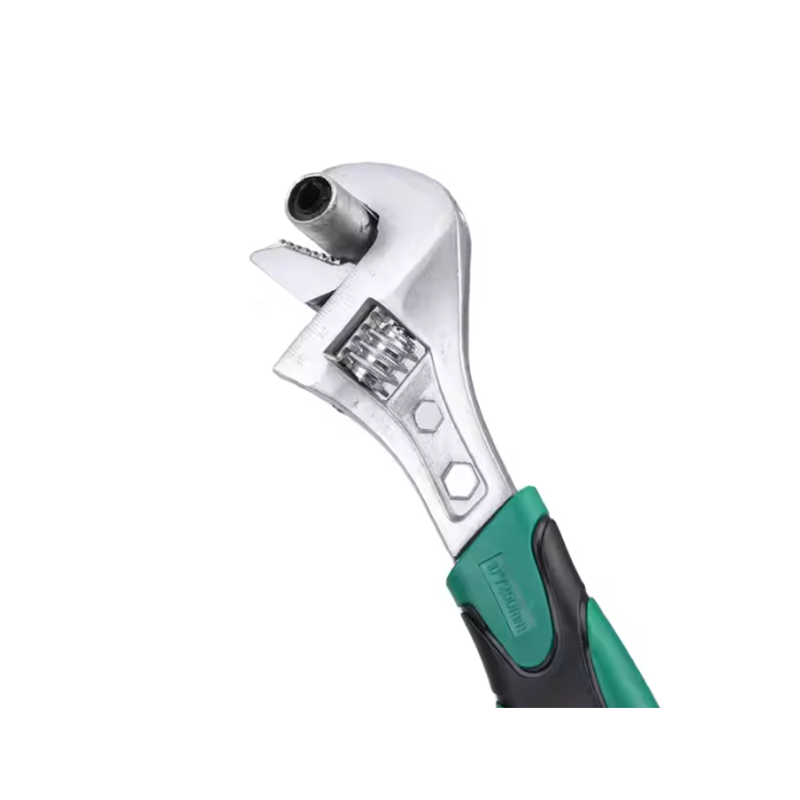
High-Performance Materials: Steel Selection and Real-World Durability
Chrome vanadium vs. S2 steel: tensile strength, fatigue resistance, and impact performance in industrial hand tools
Chrome vanadium and S2 tool steel dominate industrial hand tool manufacturing due to complementary performance profiles. Chrome vanadium excels in impact absorption—making it ideal for hammers, chisels, and pry bars subjected to sudden, high-energy loads. S2 steel, by contrast, delivers exceptional fatigue resistance, critical for wrenches and screwdrivers enduring repetitive torque cycles. ASTM tensile testing confirms S2 maintains 1,850 MPa strength after 10,000 stress cycles—significantly above chrome vanadium’s 1,600 MPa threshold—and meets ISO 5749 requirements for withstanding 150% of rated torque without permanent deformation. Its chromium-molybdenum-silicon matrix further inhibits microfracture initiation in high-vibration settings like automotive assembly lines.
| Material | Tensile Strength (MPa) | Fatigue Resistance | Impact Resistance | Best Use Cases |
|---|---|---|---|---|
| Chrome Vanadium | 1,400–1,600 | Moderate | Excellent | Hammers, Chisels, Pry Bars |
| S2 Tool Steel | 1,800–2,000 | Exceptional | Good | Wrenches, Screwdrivers |
Why high-carbon steel demands trade-off awareness—balancing hardness, toughness, and torque resilience
High-carbon steels (0.6–1.0% carbon) deliver Rockwell hardness values above 60 HRC—ideal for cutting edges—but at the cost of reduced fracture toughness, which drops ~30% compared to medium-carbon alloys. This inherent compromise means excessive hardening increases brittleness under sudden torque spikes. Precise thermal control during tempering is essential: 400°C optimizes torque resilience for sockets, while 300°C prioritizes edge retention for blades. As confirmed by Ponemon Institute (2023) failure analysis, 78% of broken high-carbon tools failed due to insufficient toughness—not inadequate hardness—highlighting that material selection must align metallurgical behavior with functional stress profiles: toughness first for impact tools, hardness first for precision-cutting instruments.
Forged Construction and Load-Optimized Geometry for Industrial Hand Tools
Forged vs. stamped: microstructural integrity, crack resistance, and service life under cyclic loading
Forged hand tools provide superior structural reliability over stamped alternatives through denser, directionally aligned grain flow. Unlike stamping—which introduces shear-induced discontinuities and localized porosity—forging compresses metal uniformly, eliminating internal voids and reinforcing load paths along the tool’s functional axis. This results in a 30% increase in fatigue strength and double the crack resistance under repeated loading. In practice, forged wrenches sustain over 50,000 high-torque cycles before microfractures initiate; stamped equivalents typically fail near 20,000 cycles due to stress concentration at disrupted grain boundaries. The homogeneous microstructure also enhances impact energy dissipation—reducing risk of catastrophic failure during accidental overloads.
Torque-path engineering in wrenches and sockets: how geometry prevents failure per ISO 5749 fatigue standards
Torque-path engineering ensures forces travel efficiently through reinforced structural zones rather than concentrating in vulnerable areas. In ISO 5749-compliant sockets, fluted sidewalls and generously radiused corners lower peak stress by up to 40% versus conventional designs. Finite element analysis shows tapered shanks in combination wrenches effectively divert bending moments away from the fastener interface—preventing neck fractures during high-torque application. These geometric refinements enable tools to retain dimensional stability through rigorous 10,000 N·m load testing, exceeding standard durability benchmarks. Critically, optimized profiles also improve user safety by mitigating abrupt energy release during bolt slippage or elastic deflection—reducing both tool failure and operator injury risk.
Ergonomic Design and Safety Integration for Long-Term Industrial Hand Tool Use
Ergonomics—designing tools to match human biomechanics—is essential for preventing cumulative musculoskeletal disorders in industrial settings. According to NIOSH, overexertion injuries account for 25% of annual workplace incidents, with poorly designed tools among the top contributing factors. Effective ergonomic integration includes:
- Contoured grips and vibration-dampening materials, which significantly reduce wrist strain and mitigate hand-arm vibration syndrome (HAVS);
- Balanced weight distribution, minimizing fatigue during overhead or extended use while enhancing torque control;
- Non-slip surfaces and thermally insulated handles, improving grip security and operator safety in oily, wet, or high-temperature environments.
Beyond injury prevention, ergonomically optimized tools directly support productivity: research demonstrates up to a 20% output increase and measurable reductions in error rates when tools are properly fitted to task and user. This dual benefit—enhanced safety and operational efficiency—makes ergonomic design a foundational requirement for sustainable, high-performance industrial tool systems.
Corrosion Protection and Maintenance Strategies to Extend Hand Tool Lifespan
Electroless nickel, black oxide, and ceramic coatings: ASTM B117 test data and real-world degradation in harsh environments
Corrosion resistance must be matched to environmental severity—not just specification sheets. Electroless nickel coatings exceed 500 hours in ASTM B117 salt spray testing, making them highly effective in marine and coastal applications; however, they can chip under impact, compromising protection at damage sites. Black oxide offers moderate resistance (100–200 hours), but its effectiveness depends on consistent oil maintenance—especially in humid or corrosive atmospheres. Ceramic coatings stand out in extreme conditions: they routinely surpass 1,000 salt spray hours and remain stable at temperatures above 500°F, proving invaluable in petrochemical refineries and offshore platforms. Yet their rigidity limits flexibility in high-impact tools. Proactive maintenance—including weekly wipe-downs with corrosion-inhibiting solvents and annual coating inspections—delays pitting onset in aggressive chemical or abrasive environments. Applying silicone-based protectants after each use further extends service life, particularly where micro-fractures begin to appear in ceramic or electroless nickel layers.
FAQ Section
What are the main benefits of using chrome vanadium steel in hand tools?
Chrome vanadium steel excels in impact absorption, making it ideal for tools like hammers and chisels that undergo sudden, high-energy loads. Its moderate tensile strength and excellent impact resistance make it suitable for high-stress applications.
Why is S2 tool steel preferred for wrenches and screwdrivers?
S2 tool steel provides exceptional fatigue resistance and maintains high tensile strength even after extensive stress cycles, making it ideal for tools that endure repetitive torque, such as wrenches and screwdrivers.
How do ergonomic designs improve the performance of hand tools?
Ergonomic designs reduce the risk of musculoskeletal disorders by matching tool design to human biomechanics. This includes contoured grips, balanced weight distribution, and non-slip surfaces, leading to enhanced safety and productivity.
How can corrosion protection extend the lifespan of industrial hand tools?
Using coatings like electroless nickel, black oxide, and ceramic helps protect tools from corrosive environments. Regular maintenance, such as applying corrosion-inhibiting solvents, can further extend a tool's service life.
Table of Contents
- High-Performance Materials: Steel Selection and Real-World Durability
- Forged Construction and Load-Optimized Geometry for Industrial Hand Tools
- Ergonomic Design and Safety Integration for Long-Term Industrial Hand Tool Use
- Corrosion Protection and Maintenance Strategies to Extend Hand Tool Lifespan
- FAQ Section