 EN
EN

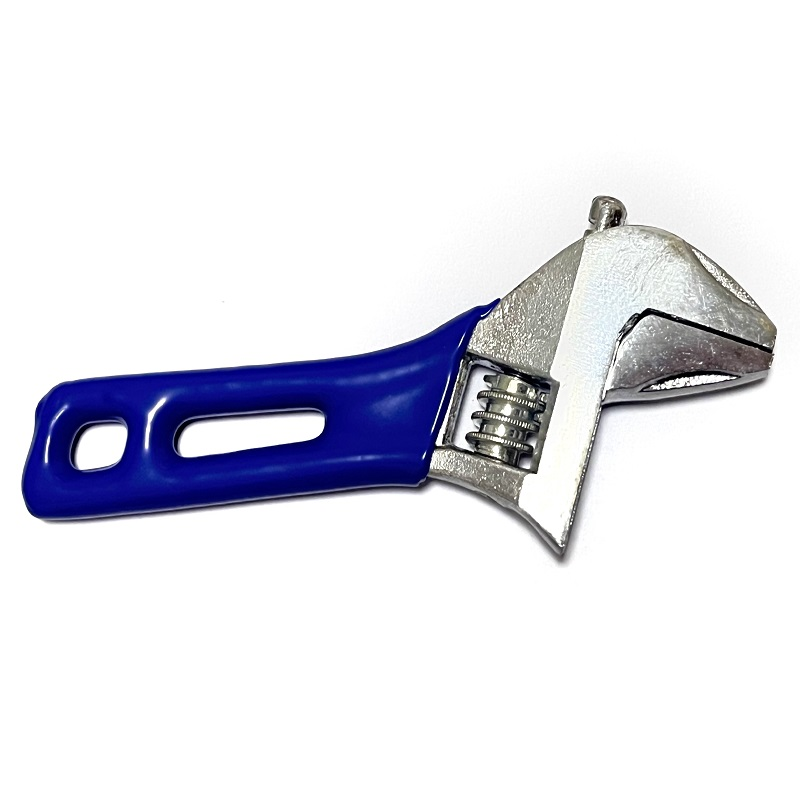
Torque Wrenches: Ensuring Repeatable Fastener Accuracy
Why Over- and Under-Torquing Threaten Joint Integrity
When torque isn't applied correctly, it basically ruins the whole mechanical system. If bolts aren't tightened enough, joints start moving around which leads to faster wear and tear from all that vibration. On the flip side, tightening too much stretches bolts permanently, messes up threads, and creates tiny cracks that can get worse over time. Either way bad things happen eventually like oil leaking out of hydraulic systems, parts getting out of alignment while spinning, or even entire structures falling apart under weight. Studies looking at aircraft maintenance show that about 30% of all mechanical problems come down to wrong torque settings. Getting the calibration right keeps everything working properly because it maintains the pressure needed to hold components together, makes sure there's consistent tension across all fasteners, and helps prevent those annoying vibrations from shaking things loose after installation.
Mechanism Comparison: Beam, Click, and Digital Torque Wrenches
Three primary torque wrench designs serve distinct precision and traceability requirements:
| Type | Accuracy Range | Calibration Needs | Best Use Case |
|---|---|---|---|
| Beam | ±4% | Minimal | Low-cost static assemblies |
| Click | ±3% | Quarterly | Automotive/General repairs |
| Digital | ±1% | Annual | Aerospace/Medical devices |
Beam wrenches work by bending slightly when force is applied and don't need any setup before use, but they won't let users know when they've reached the right torque through sound or feel. Click wrenches give clear warnings when reaching target torque levels with both sound and vibration, although these tools lose accuracy over time if not properly calibrated regularly. The digital versions take things further with instant readings on screens, adjustable settings for different jobs, and built-in memory to record measurements something that matters a lot in fields where documentation is required for audits. As long as manufacturers follow recommended maintenance schedules, these digital tools stay accurate within about 1% across multiple uses, which makes them the go to choice for work where precision really counts.
Precision Screwdrivers: Micro-Control for High-Tolerance Fastening
Preventing Cross-Threading and Cam-Out in Miniaturized Assemblies
When working with electronics, medical equipment, and those tiny MEMS components, problems like cross-threading and cam-out can really mess up how things function. Cross-threading happens when something gets inserted at the wrong angle, which damages the threads inside before everything lines up properly. Then there's cam-out, where the tool slips off the fastener head when torque is applied, causing damage to materials or changing the shape of the head itself. These issues become super critical at tolerances below 0.1mm because they can ruin seals, disrupt electrical connections, or weaken structural integrity altogether. Good quality precision screwdrivers help avoid these headaches thanks to tips that fit fasteners exactly right and handles shaped for comfort that stop unwanted rotation. Research indicates that using correctly matched tips cuts down cam-out occurrences by more than half versus regular tools according to Assembly Technology Review last year. Plus, better grip designs make all the difference in maintaining control during those repetitive tightening jobs that require just the right amount of pressure.
Design Essentials: Tip Geometry, Shaft Rigidity, and Torque Feedback
Three interdependent features define performance in precision screwdrivers:
-
Tip Geometry: Precision-machined profiles—including JIS, Torx, and recess-specific variants—maximize surface contact and distribute torque evenly across the fastener head. Torx tips, for example, engage six points versus Phillips' four, reducing cam-out risk by 45% (Fastener Engineering, 2023).
-
Shaft Rigidity: High-carbon steel shafts with Rockwell hardness ≥58 HRC maintain axial alignment under load. Testing confirms such shafts reduce torsional deflection by 70% in deep-reach or high-torque applications—preserving engagement integrity where visibility and access are limited.
-
Torque Feedback: Integrated slip-clutch mechanisms and calibrated tactile cues alert operators at precise thresholds (0.05–0.5 N·m), preventing over-tightening that cracks plastic housings or strips micro-threaded inserts.
| Design Feature | Function | Performance Impact |
|---|---|---|
| Tip Geometry | Force distribution | – Cam-out incidents by 45% |
| Shaft Rigidity | Alignment stability | – Deflection by 70% |
| Torque Feedback | Tightness control | Prevents 90% of over-torque failures |
This integrated design philosophy ensures consistent, damage-free fastening in aerospace avionics, implantable devices, and other applications where dimensional fidelity defines product lifespan.
Measuring and Alignment Tools: Building Dimensional Confidence
Combination Squares, Dial Indicators, and Straightedges in Stack-Up Control
Getting dimensions right from the start matters a lot when dealing with multiple parts that need to fit together properly. A combination square comes in handy for checking if those 90 degree angles are spot on between components, something that makes all the difference when mounting brackets or fitting housings correctly. Dial indicators can pick up tiny changes down to 0.001 inch movements, which helps catch problems like wobbling bearings or how materials expand when heated. For flat surfaces where seals sit or where machines rest, straightedges are essential to make sure everything stays level so pressure distributes evenly across gaskets. These handheld tools give workers direct feedback while putting things together, unlike those big fixed measurement stations that only tell stories after the fact. According to some studies published back in 2022, around 37% of mechanical breakdowns reported in the field seem to stem from stacking up small dimension errors beyond 0.5mm. That's why smart shops keep alignment tools close at hand throughout every step of assembly work, saving time and money down the road when tolerances start adding up unexpectedly.
Hex and Socket Tools: Reliable Engagement in Confined or Critical Interfaces
The reliability of hex and socket tools hinges on precise, repeatable engagement—especially in tight spaces or safety-critical assemblies where fastener failure is unacceptable. Optimal performance depends not only on dimensional fit but also on thoughtful material pairing and ergonomic integration.
Avoiding Hex Head Rounding Through Proper Fit and Material Matching
When hex keys are too small, worn out, or not properly hardened, they tend to wear down fastener heads pretty quickly. This leads to problems like rounded corners, stripped sockets, and those frustrating assembly delays nobody wants to deal with. According to ISO 2936:2014 standards, there needs to be very specific tolerances between the socket and the fastener itself. These tight specs help maintain full face contact and spread the load evenly across the surface. A recent study from NIST found something interesting too. Tools that have dimensional differences over 5% actually raise the chance of rounding by about 63%. What kind of materials we use matters quite a bit for how long things last. High carbon steel drivers work much better with stainless steel fasteners when it comes to reducing galling issues compared to using carbon steel on carbon steel parts. This becomes especially important in places where there's lots of moisture or chemical exposure around.
Innovations: Ball-End, Fluted, and Ergonomic Hex Keys for Assembly Efficiency
Modern hex key designs address real-world constraints in high-volume and confined-space assembly:
- Ball-end hex keys allow up to 25° angular offset without losing engagement—enabling access to obstructed fasteners without repositioning components.
- Fluted shanks reduce torsional flex by up to 30%, preserving torque accuracy and reducing operator effort at higher settings.
- Ergonomic T-handles with textured, non-slip coatings lower grip fatigue during repetitive tightening—improving consistency and reducing human-error variance.
Collectively, these innovations cut cam-out incidents by an average of 40% in production-line testing while sustaining joint integrity across thousands of cycles—demonstrating how thoughtful tool evolution supports both operator well-being and assembly reliability.
FAQ
What are the main types of torque wrenches?
The main types of torque wrenches are beam, click, and digital. Each has its own set of features and best use cases.
Why is torque accuracy important in mechanical systems?
Torque accuracy is crucial because incorrect torque can lead to joint instability, premature wear, or even system failure due to loosened or overtightened components.
How do precision screwdrivers prevent cross-threading?
Precision screwdrivers prevent cross-threading by offering exact tip geometry that aligns perfectly with fasteners, thereby reducing the risk of misalignment and damage during installations.
What is the role of measuring and alignment tools in assembly?
These tools ensure that multiple parts fit together precisely, preventing stack-up of dimension errors, which can lead to mechanical failures.
Why are ergonomic hex keys beneficial?
Ergonomic hex keys reduce user fatigue and improve grip, making it easier to apply consistent force, especially in repetitive tasks or confined spaces.