 EN
EN

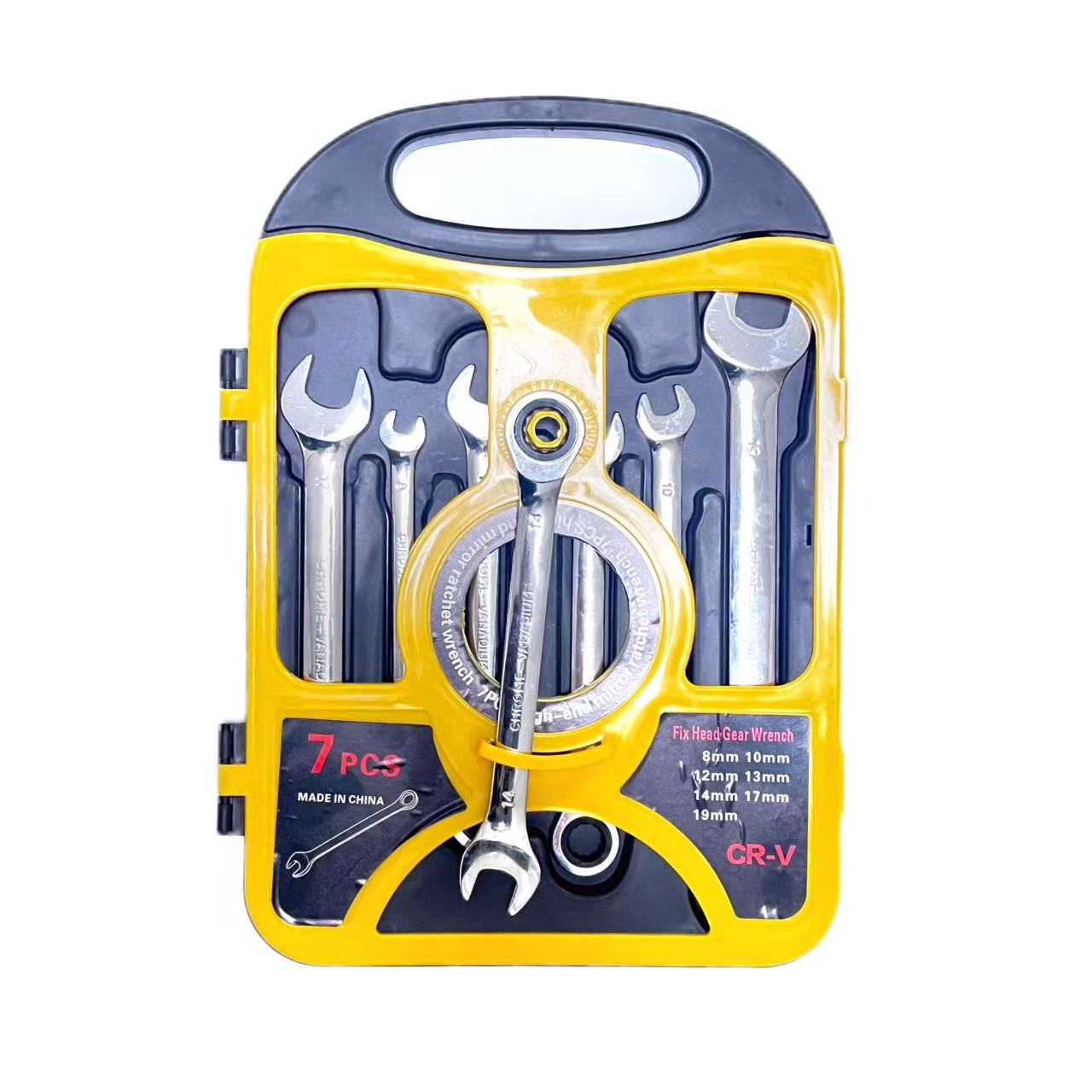
How Ratchet Mechanism Design Impacts Performance in Confined Areas
Core Mechanics of a Ratchet Wrench and Its Advantages
What makes a ratchet wrench so useful is its directional locking feature, allowing workers to keep tightening bolts without constantly taking the tool off the nut. That's a big deal when working in cramped engine compartments or machinery where space is limited. Regular wrenches need at least a 30 degree swing to work properly, but good quality ratchets can function with just 5 degrees of movement. The secret lies in those finely crafted pawl and gear systems inside, which stay engaged throughout each ratcheting motion. This means mechanics spend less time fumbling around and have better control even when dealing with stubborn fasteners in tight spots.
How the 72-Tooth Ratchet Mechanism Enables a 5-Degree Swing Angle
When we talk about gears, a 72 tooth one breaks down a full circle into 5 degree segments since 360 divided by 72 equals exactly 5 degrees. This means these gears work in places where regular 36 tooth ratchets just won't do because they need twice as much space between movements at 10 degrees each. The smaller swing makes all the difference when mechanics are trying to get into tight spots inside engines that are crammed full of components. According to some recent testing done by folks at the Machinery Design Institute back in 2023, their findings indicated that those 72 tooth models actually finished removing bolts about 23 percent quicker compared to the older 50 tooth versions when working on cars in really cramped conditions. Makes sense why so many professionals are switching over now.
Gear Tooth Count and Its Impact on Ratcheting Smoothness and Durability
More teeth generally means smoother operation, though there's always a tradeoff with how long the tool will last. Take those 120 tooth ratchets for instance they can do really fine 3 degree movements, but the problem is their teeth are so thin they wear down about 40 percent quicker when someone applies around 90 foot pounds of torque according to a study from Machinery Design Institute back in 2023. Most folks in the field stick with between 72 and 90 teeth because this range seems to strike the right balance between getting smaller arcs and keeping the tool sturdy enough for regular use, particularly if made from hardened chrome vanadium steel. And now we're seeing these newer dual pawl systems on the market too, which help extend tool life since they spread out the pressure over roughly 54% more surface area than traditional single pawl designs.
Flex Head vs. Stubby Ratchets: Optimizing Access in Tight Spaces
Flex-Head Ratchets: Precision and Adaptability in Tight Mechanical Environments
Flex head ratchets come with pivoting heads that can move around up to 30 degrees, making them great for getting at those hard to reach bolts deep inside engines and machinery. Mechanics report noticeable time savings too. According to some research from last year, fixing alternator brackets in cramped spots took about 28 percent less time when workers used these 30 degree flexible ratchets instead of standard fixed ones. What really matters here is how often mechanics need to lift and adjust their tools during a job. When there's barely any space left between components, say less than 15 degrees clearance, having that extra flexibility becomes absolutely essential for completing repairs efficiently without constantly stopping to reposition tools.
Difference Between Standard, Flex Head, and Stubby Ratcheting Wrenches
| Feature | Standard Ratchet | Flex-Head Ratchet | Stubby Ratchet |
|---|---|---|---|
| Swing Arc Required | 15°–20° | 10°–15° | 5°–8° (72-tooth gear) |
| Handle Length | 6"–12" | 6"–10" | 3"–4" |
| Torque Capacity | 65 ft-lbs | 55 ft-lbs (45° pivot) | 35–40 ft-lbs |
| Ideal Workspace Depth | ≥4" | 2.5"–4" | ≥2" |
Stubby ratchets prioritize compactness over leverage, while flex-head variants offer a balance between directional adaptability and usable torque output.
Case Study: Automotive Engine Bay Repairs Using a 30° Pivoting Flex Head
During timing chain replacements on transverse-mounted V6 engines, technicians using 72-tooth flex-head ratchets removed camshaft sprocket bolts 40% faster than with stubby wrenches (2024 Automotive Repair Benchmark). The 30° pivot allowed navigation around exhaust manifolds and steering components where vertical clearance was under 1.5".
Performance Comparison: Stubby vs. Full-Length Ratchets Under Load
Stubby ratchets reduce torque application by 45–55% compared to 8" standard models due to shortened handles (Machinery Maintenance Journal 2023). However, high-tooth-count stubby designs (90+) perform well in low-torque scenarios (<25 ft-lbs), making them ideal for electrical panel work or HVAC valve adjustments.
Offset and Telescoping Ratchets for Deep and Obstructed Fasteners
Telescoping and Offset Ratcheting Wrenches for Deep Recessed Access
Telescoping ratchet wrenches feature extendable handles that grow up to 50% longer than standard models, providing precise access to deep-set fasteners in drivetrains or machinery frames. Offset ratchets complement this with 15°-angled heads that bypass obstructions like hydraulic lines or wiring harnesses without sacrificing torque delivery.
Offset Ratchet Wrenches: Reaching Behind Obstructed Components
The 72-tooth offset ratchet wrench excels in aerospace panel maintenance, where its 5.5mm-thin head clears interference points 60% more effectively than conventional designs. Field reports indicate a 32% reduction in hand repositioning during diesel engine block servicing, thanks to the low-profile head geometry.
Field Test Data: 40% Faster Bolt Cycling in HVAC Systems Using Telescoping Models
According to a 2023 HVAC Efficiency Study, telescoping ratchets reduced average bolt cycling time from 22 seconds to 13 seconds during condenser unit maintenance. Participants achieved 98% fastener accessibility in tight ductwork, compared to 67% with standard wrenches.
Trend: Integration of Modular Extensions in Offset Ratchet Systems
Manufacturers now offer magnetic quick-connect extensions for offset ratchets, enabling rapid transitions between ¼” and ” drive sizes without tool removal. In wind turbine gearbox repairs, this innovation reduced service interruptions by 19%, based on maintenance logs from six commercial sites.
Swing Angle, Torque Efficiency, and Real-World Usability Metrics
How Minimal Swing Angles (5°–10°) Improve Functionality in Tight Quarters
The latest ratchet wrench designs can speed up bolt work by around 40% when working in tight spots, all thanks to smaller swing angles needed for operation. Mechanics only need about a 5 degree arc, which is roughly what happens if someone stacks two quarters on top of each other, before they have to move position without losing grip on the fastener. This feature really matters down in those cramped engine compartments and behind HVAC units where there's barely enough room to stick a hand through. Most technicians report having less than 5 inches side to side according to recent field reports from auto repair shops across the country.
Balancing High-Tooth-Count Gears With Torque Capacity and Durability
The 72 tooth mechanism does offer those really fine angular adjustments but comes with a downside. According to ASME standards from 2024, these setups actually see around 18 percent more stress concentration compared to their 32 tooth counterparts. That's why top manufacturers have started turning to case hardened chrome molybdenum alloys for their gears. These special materials help keep the torque capacity at 160 foot pounds even when the teeth themselves are thinner. What makes this important? Well, mechanics need tools that can handle tough jobs without breaking down. Take removing suspension bushings for example something that requires about 120 foot pounds of force while still allowing movement across roughly 20 degrees of angle change. The right gear design makes all the difference here.
Industry Paradox: Ultra-Smooth Ratcheting at the Cost of Long-Term Reliability
Testing for durability reveals that each additional 10 teeth on a ratchet mechanism increases wear by about 9.8% according to ASTM standards from 2023. The really fancy ones with over 90 teeth feel super smooth when turning but need complete rebuilds three times as frequently compared to standard 45 tooth versions used in industry settings. These high tooth count tools work great for quick jobs such as accessing drain plugs where precision matters most. But when it comes to maintaining big machines, mechanics tend to stick with the tougher, fewer tooth options that can handle rougher conditions without breaking down so easily.
Ergonomic Innovations and Material Advances in Modern Ratchet Wrenches
Advancements in Ergonomic, Lightweight Ratchet Designs
The focus on user needs has made tools much lighter and more comfortable for actual use. Mechanics who regularly work with these new ratchets are noticing something pretty significant too - around three out of every four say they feel less tired after hours of work, especially when handling those under 1.2 pounds according to recent safety reports from 2023. What makes this possible? Handles designed at odd angles (about 15 degrees off center) paired with rubber grips that have tiny textures help maintain better control even when hands get greasy during repairs. And let's talk about those super slim heads we see now, some as narrow as just over a third of an inch thick! When manufacturers combine this slim design with special two-part molding techniques, technicians can rotate their tools completely around inside cramped engine compartments while still getting all the power they need from the tool itself.
Material Innovations: Forged Chrome-Vanadium vs. Carbon Fiber Composites
| Property | Chrome-Vanadium | Carbon Fiber |
|---|---|---|
| Torque Capacity | 250 ft-lbs | 180 ft-lbs |
| Weight (12" model) | 2.1 lbs | 1.4 lbs |
| Corrosion Resistance | Requires plating | Inherently resistant |
| Chrome-vanadium steel remains the standard for high-torque applications, while aerospace-grade carbon fiber composites are preferred for extended overhead use. Lab tests confirm carbon fiber reduces vibration transfer by 40% compared to steel. |
Strategy: Selecting Based on Workspace Geometry and User Fatigue
Optimal ratchet selection depends on three key factors:
- Workspace clearance: Gaps ≥2" favor flex-head or stubby models
- Torque demands: Applications ≥150 ft-lbs require steel construction
-
Shift duration: Tools under 1.5 lbs reduce strain during 4+ hour tasks
A recent field study found mechanics using geometry-appropriate tools completed transmission repairs 22% faster and reported 35% less wrist strain—critical for maintaining precision in tight mechanical spaces.
FAQ
What is the main advantage of a 72-tooth ratchet mechanism?
A 72-tooth ratchet mechanism allows for a 5-degree swing angle, enabling the tool to function effectively in confined spaces where standard ratchets, requiring a larger swing arc, would not fit.
How do flex-head ratchets benefit mechanics working in tight spaces?
Flex-head ratchets have pivoting heads that offer increased adaptability by allowing mechanics to access hard-to-reach bolts and work more efficiently within confined areas.
Why do some mechanics prefer offset ratchet wrenches?
Offset ratchet wrenches have angled heads that help bypass obstructions while maintaining torque delivery, making them suitable for accessing fasteners located in awkward or obstructed positions.
What materials are commonly used in modern ratchet wrenches to enhance performance?
Modern ratchet wrenches often use materials like forged chrome-vanadium for high torque capacity and durability and carbon fiber composites for lightweight and reduced vibration transfer in prolonged tasks.
Table of Contents
- How Ratchet Mechanism Design Impacts Performance in Confined Areas
- Flex Head vs. Stubby Ratchets: Optimizing Access in Tight Spaces
- Offset and Telescoping Ratchets for Deep and Obstructed Fasteners
- Swing Angle, Torque Efficiency, and Real-World Usability Metrics
- Ergonomic Innovations and Material Advances in Modern Ratchet Wrenches
- FAQ