 EN
EN

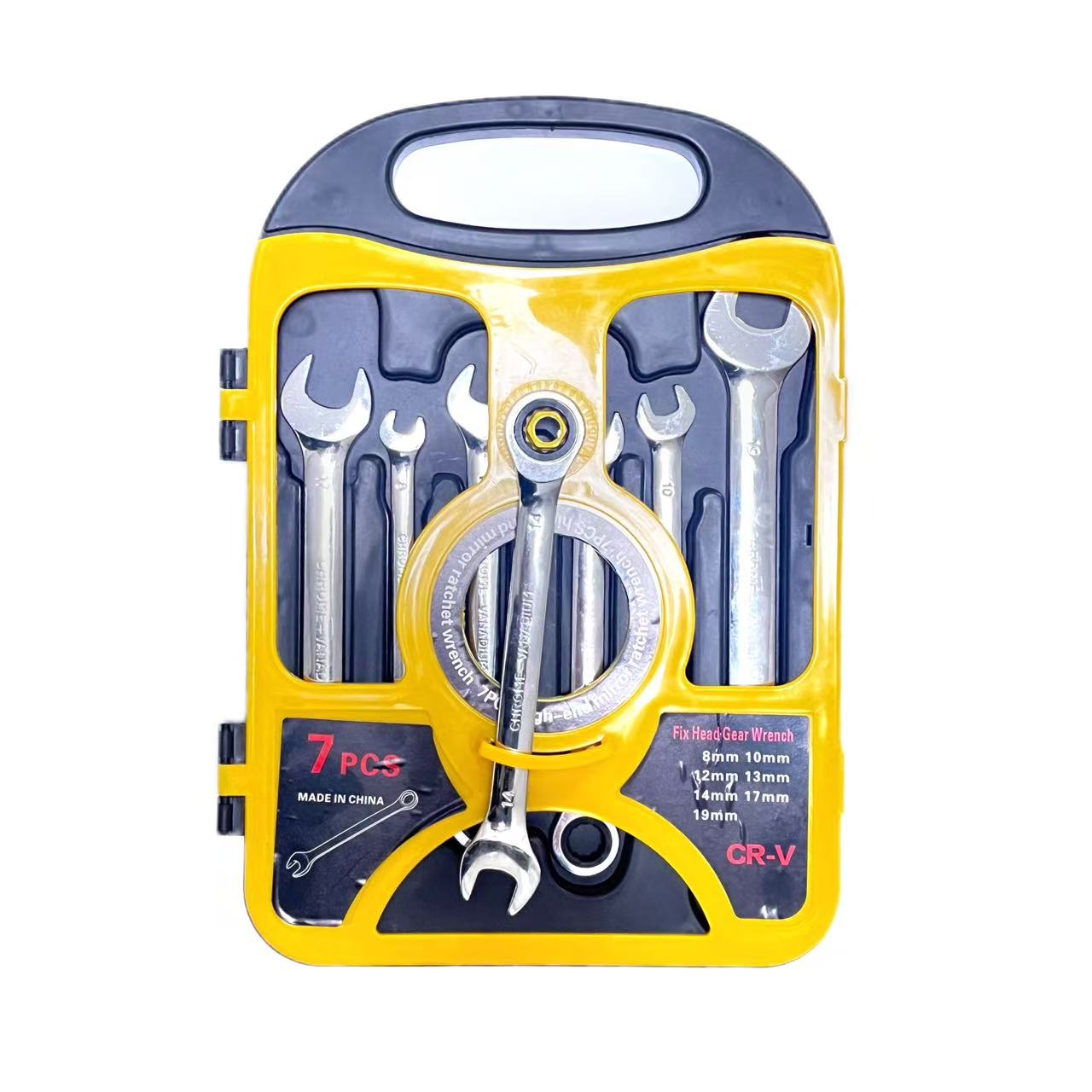
How a Ratchet Wrench Works: Core Mechanism and Key Components
The Ratchet Mechanism Explained: Pawl, Gear, and Unidirectional Motion
Ratchet wrenches work by turning back and forth handle movements into one-way twisting force thanks to three main parts working together. First there's a tough steel gear ring with specially shaped teeth. Then comes a springy little arm called a pawl that grabs onto those teeth. And finally, there's a switch that lets users choose which direction they want to apply force. High quality tools keep their gear teeth within really tight specs, around plus or minus 0.001 inches. That matters because if the teeth aren't cut right, the tool won't grip properly when needed. When someone pushes the handle in the tightening direction, the pawl clicks into place against the gear teeth so all that force goes toward turning the bolt. But when pulling the handle back, the pawl just glides over the teeth letting the handle come back easily without messing with whatever is being tightened. This clever system cuts down on wasted movement by somewhere between 60 to 70 percent compared to regular wrenches. Most good ratchets also have that handy switch that flips the pawl around, making it super easy to switch from tightening to loosening without having to take the whole tool off the bolt.
Essential Parts Breakdown: Selector Switch, Handle Design, Gear Ring, and Tooth Count (36/72/90)
Four interdependent elements define real-world performance:
- Selector Switch: Adjusts spring tension to reverse pawl engagement—designed for tactile feedback and positive detent positioning
- Handle: Ergonomically contoured with oil-resistant, textured grips to maintain control under slippery conditions
- Gear Ring: Heat-treated alloy steel housing engineered to absorb rotational shock and resist deformation under load
-
Tooth Count: Directly determines minimum swing arc and application suitability:
Teeth Swing Arc Best For 36 10° High-torque tasks 72 5° General use 90 4° Confined spaces Higher tooth counts improve access in tight areas but demand more frequent lubrication to prevent accelerated wear at the pawl-gear interface.
Proper Ratchet Wrench Setup and Safe Operation
Pre-Use Checklist: Inspection, PPE, and Workspace Readiness
Check the ratchet thoroughly before getting started. Look out for hairline cracks, worn or broken gear teeth, and any selector action that feels loose or unresponsive. These kinds of defects show up in about 12 percent of workshop tools that get regular use according to the Tool Safety Journal from last year. Safety glasses rated ANSI Z87.1 and gloves that resist cuts are a must have item when working with these tools since hands suffer injuries in around 34 thousand cases each year among mechanical tradespeople. The workspace itself matters too. Make sure there's good footing underfoot and proper lighting throughout the area. Messy workspaces or bad lighting contribute to roughly 60% of all accidents involving fasteners. Don't forget to put a single drop of light machine oil on the pawl pivot point right before using it for the first time. This small maintenance task can actually cut down on wear caused by friction by as much as 40% over time.
Correct Socket Selection: Drive Size Matching (1/4", 3/8", 1/2") and Metric vs SAE Compatibility
Mismatched sockets cause 70% of fastener rounding incidents. Match drive size to application demands and torque requirements:
| Drive Size | Max Torque | Ideal Use Case | Measurement System |
|---|---|---|---|
| 1/4" | 90 ft-lb | Electronics, bicycles | Metric & SAE |
| 3/8" | 250 ft-lb | Automotive interiors | Metric & SAE |
| 1/2" | 750 ft-lb | Lug nuts, suspension | Primarily SAE |
Always verify system compatibility—forcing metric sockets onto SAE fasteners increases shear stress by 200%, risking both fastener and socket failure. For hybrid applications, choose laser-etched dual-scale sockets. Fully seat the socket onto the drive square before applying force; partial engagement accounts for 45% of accidental socket ejection events.
Advanced Ratchet Wrench Techniques for Real-World Efficiency
Confined-Space Mastery: Universal Joints, Extensions, and Double-Socket Strategies
When working in cramped spaces such as engine compartments, ratchets with lots of teeth (around 72 to 120) and very small swing arcs down to just 3 degrees can make all the difference. These tools fit into tight spots where regular wrenches simply won't go. Combine these with universal joints and extensions allows mechanics to apply torque around obstacles without losing too much power transfer. In really tight situations behind brake calipers or under dashboard panels, using two sockets together works wonders. The second socket sits at an angle relative to the main one, creating enough space when standard tools fall short. Mechanics report saving time on car repairs because they don't have to take apart so many parts anymore. Some shops claim their technicians spend about 40% less time undoing components thanks to these setups. Before applying any force though, always check that every connection point is properly seated and secured. Loose or misaligned joints will slip and damage bolts, which nobody wants during a repair job.
Precision Optimization: Angle Control, Force Application, and Smooth Direction Switching
Getting things done efficiently really depends on how well someone controls their movements. When working, try to keep those swing arcs between about 30 to 45 degrees if at all possible. This sweet spot gives good leverage while still maintaining decent speed, which means tasks get completed around 25% faster compared to when people use shorter, cramped strokes. During the actual driving part of the movement, apply force intentionally but then let off entirely when returning back. This kind of controlled approach cuts down on pawl wear by roughly 40%, according to field observations. One thing worth remembering is never to change directions while there's still pressure on the tool. Forcing a reversal will jam the pawl right into the engaged gears and accounts for most gear tooth problems we see in practice. When doing detailed work, it helps to hold the socket steady with the other hand as switching directions happens. This makes sure the bit makes proper contact across the entire face of whatever needs tightening or loosening.
| Technique | Application Principle | Efficiency Gain |
|---|---|---|
| Controlled Swing Arcs | 30–45° leverage optimization | 25% speed increase |
| Pressure Modulation | Force application/release cycle | 40% less pawl fatigue |
| Tension-Free Switching | Direction change protocol | 78% failure reduction |
Ratchet Wrench Maintenance and Error Prevention
Proper care prevents premature failure and preserves calibrated performance. Prioritize upkeep at the pawl-gear interface—the primary stress point during operation.
Top Mistakes That Damage the Ratchet Mechanism: Over-Torquing, Misaligned Loading, and Forced Reversal
Three avoidable errors compromise structural integrity and longevity:
- Over-torquing: Exceeding a fastener’s rated torque by more than 20% overstresses gear teeth and can cause immediate shear failure
- Misaligned loading: Applying force at an angle to the socket axis bends drive lugs and warps the gear ring, degrading engagement accuracy
- Forced reversal: Switching direction without releasing tension or flipping the selector jams the pawl, often fracturing its retention spring
Longevity Best Practices: Cleaning, Lubrication, and Regular Tooth/Pawl Inspection
Extend service life with disciplined maintenance:
- Post-use cleaning: Use a solvent-dampened brush to remove abrasive debris from gear teeth, pawl surfaces, and the selector channel
- Bi-monthly lubrication: Apply one drop of light machine oil—not grease—to pawl pivot points; heavy lubricants trap grit and accelerate wear
- Quarterly inspection: Look for signs of tooth wear, chipped pawl tips, or diminished spring tension; replace components once deformation exceeds 15%
| Maintenance Task | Frequency | Critical Checkpoints |
|---|---|---|
| Mechanism cleaning | After each project | Gear teeth, selector switch |
| Lubrication | Every 60 days | Pawl pivot points, drive square |
| Structural inspection | Quarterly | Tooth alignment, spring tension |
Neglect accelerates degradation: Unmaintained ratchets fail 73% faster than those following this regimen. Focus attention on the pawl-gear interface—it endures every cycle of engagement and is the most sensitive indicator of overall tool health.
FAQ Section
What is the importance of the tooth count in ratchet wrenches?
The tooth count in ratchet wrenches directly determines the minimum swing arc and application suitability. Higher tooth counts improve access in tight areas but require more frequent lubrication to prevent accelerated wear.
How should I select the correct socket for my ratchet wrench?
To select the correct socket, match the drive size to application demands and torque requirements. Ensure measurement system compatibility to avoid increasing shear stress and risking failure.
What are common mistakes that damage ratchet mechanisms?
Common mistakes include over-torquing, misaligned loading, and forced reversal, which can compromise the structural integrity and longevity of ratchet mechanisms.