 EN
EN

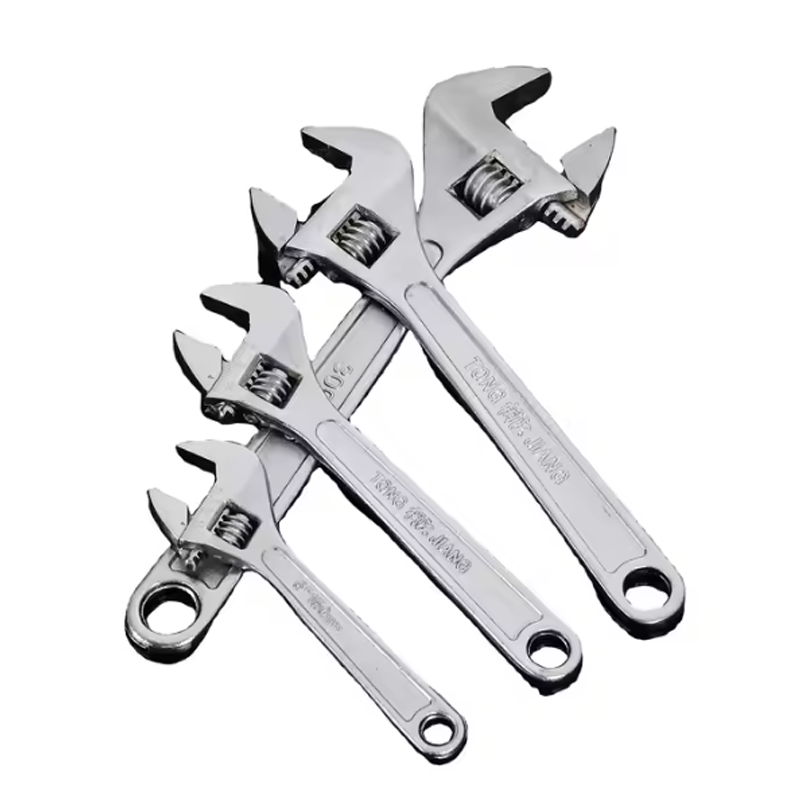
Non-Slip Grip: Engineering Control Through Handle and Jaw Design
Knurled, Dual-Material Handles for Enhanced Tactile Feedback and Slip Resistance
The knurling on spanner handles creates tiny ridges that really boost friction when gripping with bare hands or wearing gloves. Studies show these textured surfaces actually increase contact area by around 40% compared to plain smooth handles. The result? Much less chance of the tool spinning around in the user's hand when applying serious torque. Most modern wrenches now feature this dual material design combining a solid steel backbone with a layer of thermoplastic elastomer (TPE). What makes this combination work so well is that the TPE component soaks up sweat, molds itself to different hand shapes, and stays grippy even when oil gets everywhere something cheaper plastic handles just cant handle. Getting the right balance of TPE thickness matters too because it cuts down on vibrations traveling through the handle by about 30%. This means workers can still feel what they're doing, noticing those small movements in bolts before they go too tight and risk damaging whatever they're trying to fasten together.
Jaw Surface Texture and Profile Geometry's Direct Impact on Bolt Engagement Stability
The serrations on the jaws are precision milled so they grip fastener edges without damaging surrounding surfaces. These shallow angle teeth, typically below 45 degrees, create better contact area while keeping bolts from getting rounded off something that happens when using those really aggressive tooth profiles which can actually damage the bolt itself. The flank drive design makes sure the jaws sit at right angles to the flat sides of the fastener, cutting down on wobble and spreading out the pressure evenly across the surface. With parallel jaw shapes, there's consistent pressure during turning motions, which means no more slipping or camming out like what happens with those old fashioned tapered wrench designs. Tests using finite element modeling show these improved profiles cut down stress points by about a quarter, so both the fastener and the tool last longer when pushed to their limits.
Durability Essentials: Material Selection, Heat Treatment, and Forging Integrity
Chrome-Vanadium (CV) Steel: The Industry Standard for High-Strength, Fatigue-Resistant Spanners
Chrome vanadium (CV) steel has become the go to material for serious quality spanners because it strikes a good balance between strength and flexibility. The tensile strength is well over 150,000 psi thanks to chromium adding hardness while vanadium helps refine the metal grains. What makes this alloy special is how it handles stress from repeated use. When tools are subjected to constant twisting forces, regular carbon steel tends to crack over time, but CV steel holds up much better against these tiny fractures spreading through the metal. That's why mechanics and industrial workers rely on it for jobs requiring lots of torque applications day after day. Compared to standard carbon steel wrenches, CV tools maintain their shape even when dealing with rusty bolts or those that have been overtightened. And the durability pays off in the long run too. Studies show that workshops can cut down on replacing worn out tools by around 70%, though actual savings will depend on specific working conditions and maintenance practices.
Precision Heat Treatment and Hot Forging: How Process Quality Prevents Cracking and Deformation
How materials perform really hinges on both thermal and mechanical processing techniques. When it comes to precision heat treatment, there are basically three key steps involved. First we austenitize around 1500 to 1600 degrees Fahrenheit to get those carbides dissolved properly. Then comes rapid quenching which creates martensite structure, followed by tempering between 400 and 600 degrees to take care of brittleness issues. This whole process typically results in a Rockwell C hardness range of about 48 to 52. At the same time, hot forging operations happen at temperatures ranging from 1800 up to 2200 degrees Fahrenheit. This helps refine the grain structure through what's essentially just controlled compression and shaping. The difference is significant when looking at properly forged CV steel versus regular machined parts. Forged versions show roughly 30 percent better impact resistance, plus they eliminate those pesky internal voids and stress points that often lead to cracks forming in lower quality tools over time.
Jaw Precision and Fit Accuracy: The Foundational Requirement for Reliable Non-Slip Performance
Getting the jaw shape right matters a lot when it comes to making sure tools don't slip during use. When the fit between tool and fastener isn't spot on within those tight micrometer tolerances, even something as tiny as 0.1mm out of spec can mess up how much surface area actually contacts the bolt. This leads to problems down the road like rounded corners and slippage when torque is applied. A proper fit directs all that force straight onto the bolt head instead of putting strain on weaker spots around the edges where damage typically starts. Good manufacturers know that spreading pressure evenly across contact surfaces stops those little hotspots from forming which wear things down faster than they should. Nobody wants that wiggling feeling before a sudden slip happens, especially not in environments where workplace injuries are a real concern. Most quality tool makers rely on computer controlled machining processes to get everything just right, checking angles, width measurements, and alignment specs down to within plus or minus 0.02mm. What we end up with is better grip performance that lasts longer, which means safer operations overall and fewer replacements needed for worn out tools in the long run.
Torque Management and Jaw Integrity: Avoiding Bolt Rounding and Spanner Failure
Hardness Grading and Jaw Geometry Optimization for Bolt Head Protection Under Load
Getting reliable torque requires just the right balance of jaw hardness and shape. Most industry specs call for jaws in the range of 45 to 50 HRC hardness. This is intentionally higher than standard bolts at around 30 HRC so the jaws don't get deformed under pressure but still stay tough enough not to break easily. The angles on the sides (usually between 15 and 30 degrees) plus rounded corners help spread out the force when tightening nuts and bolts. This prevents those annoying situations where the corners round off because all the stress focuses on one spot. When everything works together properly, tools maintain better contact surfaces even during heavy duty work, which cuts down slippage problems by about 40 percent over cheaper designs. Properly made wrenches can actually absorb some vibration too, meaning both the fasteners and the tools last longer without losing grip power over time.
FAQ
Why is knurling important on spanner handles?
Knurling creates tiny ridges that boost friction, enhancing grip with or without gloves, and increases the contact area significantly, reducing the chance of tool slip during torque application.
What makes Chrome-Vanadium steel suitable for spanners?
Chrome-Vanadium steel offers high tensile strength, handles stress well, and is resistant to tiny fractures, making it ideal for repeated use involving high torque.
How does jaw geometry affect tool performance?
Proper jaw geometry ensures consistent pressure on fasteners during use, minimizing the risk of slipping or rounding the bolt while spreading out stress evenly.
What are the benefits of precision heat treatment and hot forging?
These processes enhance the impact resistance of tools and eliminate internal voids, improving durability and preventing cracking or deformation over time.
Table of Contents
- Non-Slip Grip: Engineering Control Through Handle and Jaw Design
- Durability Essentials: Material Selection, Heat Treatment, and Forging Integrity
- Jaw Precision and Fit Accuracy: The Foundational Requirement for Reliable Non-Slip Performance
- Torque Management and Jaw Integrity: Avoiding Bolt Rounding and Spanner Failure
- FAQ