 EN
EN

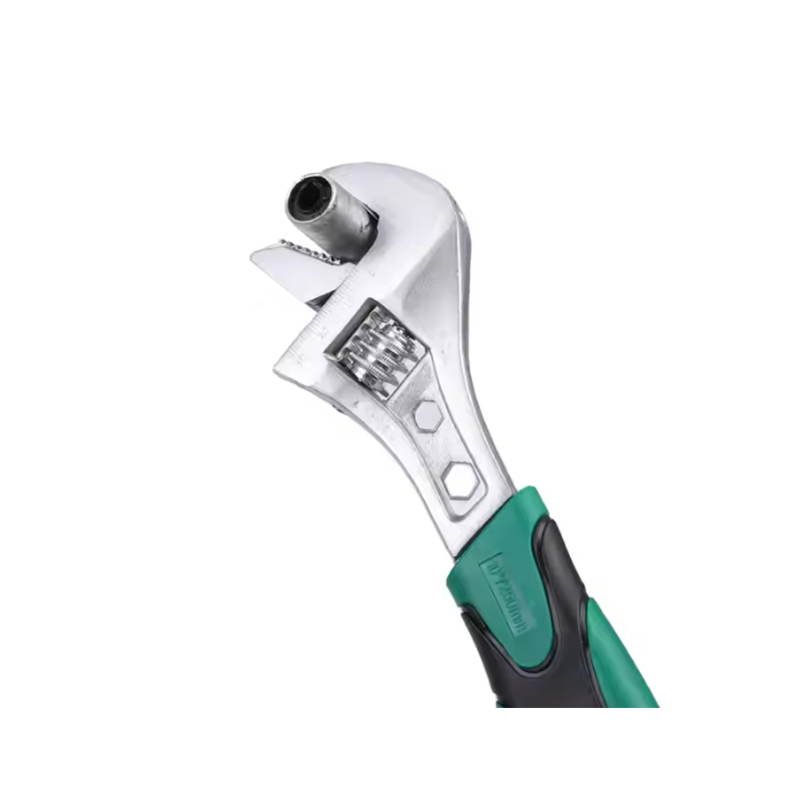
Boosting Machining Efficiency and Reducing Downtime with Premium Tools
How Subpar Tools Cause Unplanned Stops and Inconsistent Cycle Times
When tools don't perform consistently, it leads to those frustrating production stoppages that end up costing manufacturers somewhere between 15 and 20 percent in lost productivity every year. Poor quality cutting tools tend to wear out way too fast during big production runs, which means having to swap them out urgently and throws everything off schedule. The result? Cycle times get extended by around 22% on average, which actually translates to losing about 8.5 precious production hours each week. And things get even worse with cheaper materials that deform under heat. When parts start drifting outside their size specifications halfway through a batch run, it creates all sorts of scheduling nightmares for plant managers trying to keep things running smoothly.
The Role of Advanced Materials and Hard Coatings in Sustaining Cutting Performance
Premium tools leverage carbide substrates and specialty coatings to maintain cutting integrity under extreme conditions:
- PVD/DLC coatings reduce friction coefficients by 40%, extending mean time between failures to 250+ operating hours
- Nanocomposite structures retain edge geometry 68% longer than conventional HSS tools during hard-part milling
- Thermally stable alloys limit expansion to ±3μm at 1,200°F, enabling sustained ±0.001" precision
These innovations deliver 50% fewer unplanned stops and 19% faster feed rates. When over 60% of downtime costs trace to tooling failures, the operational advantages become quantifiable—a single high-performance end mill prevents $7,200/hour in disruption losses during continuous production cycles.
Ensuring Part Consistency and Tight Tolerance Control at Scale
Cumulative Deviation Risks in High-Volume Runs Without Stable Tool Geometry
Microscopic flaws in cutting tools during mass production can really add up fast. Each tiny imperfection gets worse over time, creating bigger dimensional problems as more parts are made. If the tool shape isn't stable enough, small changes in how sharp the edges are or issues with the protective coating lead to errors that grow beyond plus or minus 0.005 millimeters after just 500 pieces. These kinds of gradual shifts mean factories have to stop production halfway through runs for expensive adjustments, and they end up throwing away around 12% of their product when making things like turbine blades where precision matters most. Better quality carbide tools that come with multiple layers of protection last about ten times longer before needing replacement compared to regular ones. This extended life helps keep those annoying tolerance issues from building up so much over time.
Thermal Stability and Rigidity: Why Top-Tier Tools Maintain Accuracy Under Load
The latest cutting tools use sintered tungsten carbide cores along with substrates that have been cryogenically treated to stand up against thermal expansion problems especially important when working at temps over 800 degrees Fahrenheit. Regular steel tools tend to bend about 0.01mm when subjected to loads around 200kg, but the better quality ones only show less than 0.002mm movement thanks to how their grain structures are optimized. This kind of stiffness makes a big difference in operations like deep pocket milling where spring back is a constant issue, keeping position accurate down to just 5 microns even after hours of running non stop. When paired with shank designs that cut down on vibrations caused by harmonics, all these features work together so machines can maintain tolerances within plus or minus 0.001mm day after day without breaking a sweat during round the clock manufacturing runs.
Optimizing Total Cost of Ownership Through Longer-Lasting Tools
Hidden Costs of Frequent Tool Changes: Scrap, Rework, and Energy Waste
When tools need changing, production stops dead in its tracks, and this creates all sorts of problems that eat into profits long after the machine has stopped running. Cheap quality tools just don't last, needing replacement about 30 percent more often during those big production runs. Every time someone swaps out a worn tool, there's wasted material because the cuts aren't aligned properly and temperatures fluctuate. Fixing these mistakes takes extra work too, using somewhere between 15 and 20 percent more energy for each faulty part that comes off the line. According to the Manufacturing Efficiency Report from 2023, unexpected downtime costs factories around $50,000 every single hour. And it gets worse when coatings accelerate wear rates, causing drivetrain loads to increase by up to 25%, thereby raising energy consumption. This vicious cycle traps machines in maintenance mode, forcing operators to spend roughly 18% of working hours fixing avoidable deficiencies.
Data-Driven ROI: How ISO 50001-Aligned Tool Strategies Cut Energy Use per Part
Implementing ISO 50001 energy management standards with premium tooling transforms cost structures. High-performance carbide tools with thermal-barrier coatings sustain optimal cutting parameters three times longer, reducing changeovers by 40%. This stability enables predictive maintenance, slashing unplanned downtime by 55%. As validated by ISO 50001 audits, shops using advanced tool strategies achieve:
| Cost Factor | Standard Tools | ISO 50001-Optimized Tools |
|---|---|---|
| Energy per part | 2.1 kWh | 1.4 kWh (−33%) |
| Scrap rate | 6.8% | 2.1% (−69%) |
| Tool change frequency | 8x/shift | 3x/shift (−62.5%) |
These metrics prove that durable tools lower Total Cost of Ownership (TCO) through cumulative savings: fewer changeovers, reduced scrap, and sustained energy efficiency under load.
Strengthening Safety, Compliance, and Market Position with Reliable Tools
Good quality tools aren't just nice to have around the shop floor - they're absolutely essential for keeping workers safe and meeting all those regulations that manufacturers must follow. Cheap or worn out equipment leads to accidents and gets companies hit with fines they really don't want. According to OSHA data, broken machinery causes nearly one in five serious injuries across manufacturing facilities nationwide. When shops invest in proper tools, these items stay accurate even when pushed hard during production runs, which is exactly what standards bodies like ISO and ANSI look for during inspections. The financial stakes here are huge too. Safety violations can land manufacturers with bills over $150,000 each time something goes wrong. Clients tend to notice this stuff too, especially bigger companies that only work with suppliers carrying proper certifications. Many plant managers actually report that almost four out of five procurement decisions go to vendors who can show their safety records and quality control processes upfront. So while buying better tools might seem expensive at first glance, it turns what was once just another line item on the budget into something that actually helps win contracts and builds a stronger reputation in the marketplace.
FAQ Section
Why do subpar tools cause unplanned production stops?
Subpar tools often wear out quickly and require urgent replacements, disrupting schedules and extending cycle times, leading to unplanned production stops.
What are the benefits of using advanced materials and hard coatings in tools?
Advanced materials and hard coatings help in reducing friction, retaining edge geometry, and providing thermal stability, which results in fewer unplanned stops, faster feed rates, and operational advantages.
How do top-tier tools maintain accuracy under load?
Top-tier tools maintain accuracy under load by utilizing advanced materials that minimize movement and vibrations, hence keeping the machining tolerances precise.
What is the total cost of ownership (TCO) in relation to tooling?
The total cost of ownership (TCO) includes expenses related to tool changes, scrap rates, and energy efficiency, which can be optimized by using premium tools.
How do reliable tools strengthen safety and compliance?
Reliable tools reduce accidents and ensure compliance with regulations by maintaining performance accuracy, thus safeguarding workers and avoiding fines.